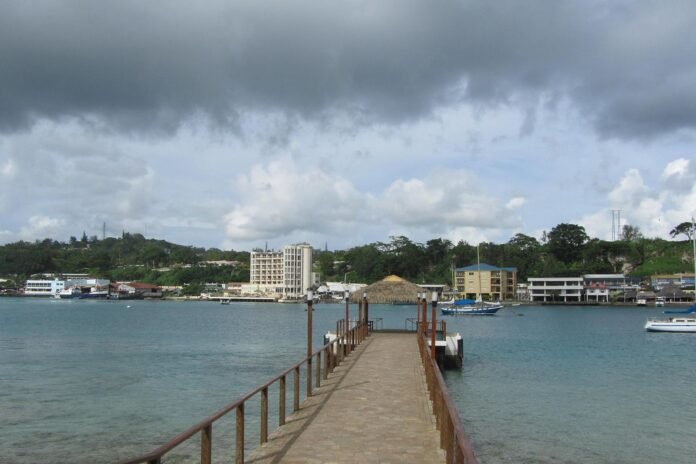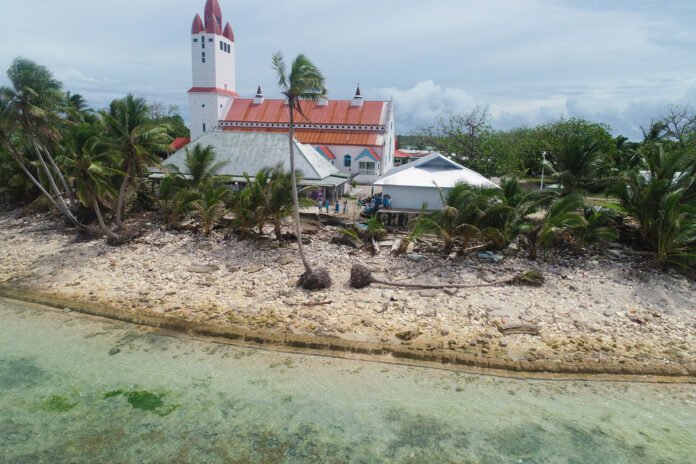
Moving to the Federated States of Micronesia (FSM), as an international student, is a significant undertaking. The experience of living abroad as an international student, while immersed in a new culture, can be an enriching experience. The beauty of this new world is enhanced by the beautiful scenery of the Pacific Islands. However, taking your family with you will add another level of complexity, especially considering health care.
The FSM’s medical system is different from other systems around the world. This is because the country has a decentralized medical system. Although the major islands have some primary health care services, for more complex care, patients are often sent to either Guam or Hawaii. For many families, their biggest problem is not finding insurance; it is finding an insurance company that provides them with a network of providers who provide quality health care at home in the FSM and help them navigate the logistics of traveling to either Guam or Hawaii for specialty care.
What Truly Matters in the Micronesian Healthcare Context
Micronesia is made up of four separate States Chuuk, Kosrae, Pohnpei, and Yap , each having their own hospitals with varying degrees of available resources for those in need of serious care; as such, the safety-net for serious cases is normally a flight to either Guam, Hawaii or the Philippines.
Although FSM laws provide support to students it does recognize dependents who participate on a national health plan. However, the major drawback is that if you are a full time student attending one of these participating schools, you will be required to pay 100% of your premiums. The best option is usually a combination of MiCare (the local system) and/or a very good international student plan which includes medical evacuation (medevac).
The “Must-Have” Feature: Medical Evacuation
Do not overlook this. A medevac from Pohnpei to Guam can cost between $50,000 and $100,000. Without insurance that specifically covers “Emergency Medical Evacuation,” a family could face life-altering debt. When searching, look for a limit of at least $250,000 for evacuation alone.
Top 10 Insurance Options for Families
Choosing the right provider requires balancing local convenience with global reach. Here are the top ten options tailored for students with dependents in the FSM.
| Provider/Plan Type | Best For | Key Advantage |
| 1. MiCare Family Coverage | Local Integration | Deeply connected to the FSM referral system. |
| 2. MiCare Student-Linked | Institutional Enrollees | Streamlined if your school has a contract. |
| 3. Allianz Care Family | Comprehensive Support | Includes oncology and repatriation as standard. |
| 4. IMG Student Health Advantage | Flexibility | High limits ($500k+) and dependent add-ons. |
| 5. Pacific Prime (Broker) | Comparison Shopping | Helps customize plans from multiple providers. |
| 6. Cigna Global (Silver/Gold) | High-End Care | $1M+ limits and strong mental health support. |
| 7. BCBS Global Xplorer | U.S. Compatibility | Best if you plan to visit Guam/Hawaii frequently. |
| 8. VUMI Global Flex | Specialized Benefits | Excellent second-opinion services. |
| 9. International Major Medical | Long-term Residents | Portable coverage if you move between islands. |
| 10. Travel Medical (Short-term) | Trial Periods | Budget-friendly for stays under 6 months. |
1. MiCare Family Coverage
The FSM’s national health insurance, MiCare, is the most locally relevant option. It is a public-private partnership that covers inpatient and outpatient services within the FSM. Because it is the “home” system, local doctors know exactly how to process claims. It often includes dental and vision, which are frequently “extras” on international plans.
2. MiCare Student-Linked Coverage
FSM law allows full-time students to join MiCare if their postsecondary institution has a contract. You are responsible for 100% of the premium, but you gain access to the same referral network as local government employees. This is often the path of least resistance for paperwork.
3. Allianz Care Family Plans
Allianz is a global powerhouse. Their “Care Plus” plan is particularly suited for Micronesia because it treats medical evacuation as a core benefit. They offer 24/7 multilingual support, which is invaluable when you are trying to coordinate a flight in the middle of the night.
4. IMG Student Health Advantage (Platinum)
IMG offers specific “Student Health Advantage” plans that allow you to add a spouse and children. The Platinum tier offers up to $1,000,000 in total coverage. Notably, they have a lower deductible for visits to student health centers, though you should check if your specific campus clinic qualifies.
5. Pacific Prime Brokered Plans
If you feel overwhelmed, a broker like Pacific Prime can be a lifesaver. They don’t sell their own insurance; they help you compare Allianz, Cigna, and Bupa. They are particularly good at finding “modular” plans where you can add dental or maternity coverage only if you need it.
6. Cigna Global (Silver or Gold)
Cigna is known for its “Silver” plan, which has a $1,000,000 annual limit. For families in Micronesia, Cigna is a strong contender because their network in Guam and the Philippines is extensive. They handle direct billing with many off-island providers, meaning you don’t have to pay thousands of dollars upfront and wait for reimbursement.
7. Blue Cross Blue Shield Global Xplorer
For students from the U.S. or those who prefer U.S.-style healthcare, BCBS is a gold standard. Their Xplorer plan is designed for people living outside their home country for more than six months. It provides a seamless transition if your “off-island referral” takes you to a hospital in Hawaii or California.
8. VUMI Global Flex VIP
VUMI is a specialized provider that focuses on “VIP” service. Their “Global Flex” plan is excellent for families who want more than just basic coverage. They offer a “Second Medical Opinion” service, which is vital when a local doctor suggests a major procedure and you want a specialist in the U.S. or Europe to review the case via video link.
9. International Major Medical Plans
These are broader than student-specific plans. If you plan to stay in Micronesia for several years or might move to another Pacific nation afterward, a major medical plan stays with you. They are more expensive but offer “portability,” meaning your coverage doesn’t end when your student visa does.
10. Travel Medical with Dependents
If you are only in Micronesia for a single semester, a travel medical plan (like World Nomads or SafetyWing) might suffice. These are significantly cheaper—often $40 to $80 per month. However, be warned: they rarely cover wellness checks, vaccinations, or chronic condition management. They are for “accidents and emergencies” only.
Cost Breakdown: What to Budget
Expect to see a significant price jump when moving from “individual” to “family” coverage.
- Student Only: Typically $70 to $160 USD per month for mid-range international coverage.
- Family (Student + Spouse + 2 Children): Usually 2 to 3 times the individual rate. Budget between $250 and $450 USD per month.
- MiCare: Premiums are often fixed bi-weekly. While they don’t always publish a public “family” list, rates are generally more affordable than private international plans, though they may have lower benefit caps.
Essential Coverage to Prioritize
When you are reading the fine print (the “Summary of Benefits”), look for these five items.
1. Inpatient and Outpatient Balance
Some cheap plans only cover you if you are “admitted” to a hospital. In Micronesia, you might visit a clinic multiple times for tropical illnesses or infections. Ensure your plan covers “Outpatient” visits and prescription drugs.
2. Pre-existing Conditions
FSM law is relatively progressive here, stating that plans shouldn’t deny claims solely because a condition existed before. However, international private insurers often have a “waiting period” (usually 12 to 24 months) before they cover pre-existing issues like asthma or diabetes.
3. Pediatric Care and Vaccinations
If you have young children, routine checkups are a monthly reality. Basic student plans often exclude “Wellness Care.” If your child needs their 2-year-old boosters, make sure your plan has a “Wellness” or “Preventative” rider.
4. Direct Billing
This is a logistical “must.” If you are referred to a hospital in Guam, you don’t want to be scrambling to find $20,000 for a deposit. Direct billing means the insurance company pays the hospital directly.
5. Repatriation of Remains
It is a somber topic, but essential for international living. Ensure the plan covers the cost of returning a family member to your home country in the event of a tragedy.
Strategic Selection Tips
Check the Hub: Ask the insurer, “Which hospitals do you work with in Guam and Hawaii?” If they don’t have a direct billing agreement with major facilities like the Guam Memorial Hospital, keep looking.
Verify Institutional Rules: Some colleges in Micronesia have “mandated” plans. Before you buy a private policy, ensure your school will accept it as a waiver.
Compare the Deductible: A $5,000 deductible makes your monthly premium low, but can you afford to pay $5,000 out of pocket during an emergency? For families, a lower deductible ($250 to $500) is usually safer, even if the monthly cost is higher.
The Simple Shortlist
If you are looking for a quick decision, follow these three paths:
- The Local Path: Choose MiCare if you are eligible and want the most integrated experience within the FSM system.
- The Premium Path: Choose Allianz Care or Cigna Global if you want the highest level of off-island referral support and direct billing in Guam.
- The Student-First Path: Choose IMG Student Health Advantage if your primary goal is meeting university requirements while still protecting your children.
Living in Micronesia is a beautiful adventure. By securing the right medical insurance, you ensure that your family’s health is never the thing that brings that adventure to an end. Focus on the evacuation limits and the ease of off-island referrals; these are the true lifelines in the Pacific.
References:
- Federated States of Micronesia Code. (2014). Health insurance (Title 52, Chapter 4). fsmlaw.org/fsm/code/title52/T52_Ch04.htm
- International Student Insurance. (n.d.). Dependent insurance. https://www.internationalstudentinsurance.com/dependent-insurance/
- International Student Insurance. (n.d.). Student Secure | International student health insurance. https://www.internationalstudentinsurance.com/student-health-insurance/
- IMG. (n.d.). International student insurance. https://www.imglobal.com/international-student-insurance
- Micare Plan. (n.d.). About Micare. http://micareplan.fm/about/
- Micare Plan. (n.d.). Providers. http://micareplan.fm/providers/
- FSM National Public Auditor. (2023). Micare health insurance plan [PDF]. http://www.fsmopa.fm/files/FY2025/Micare%20Health%20Insurance%20Plan%20FY2023_FS.pdf
- Pacific Prime. (2024). Micronesia health insurance for expats. https://www.pacificprime.com/country/australasia/micronesia-health-insurance-pacific-prime-international/
- Study Australia. (n.d.). Overseas Student Health Cover (OSHC). https://www.studyaustralia.gov.au/en/plan-your-move/overseas-student-health-cover-oshc
- VisitorPLANS. (2025). International student medical insurance. https://www.visitorplans.com/student-f1-f2-insurance
- Would you like me to clean this into a publication-ready reference list with only the sources actually used in the main answer?