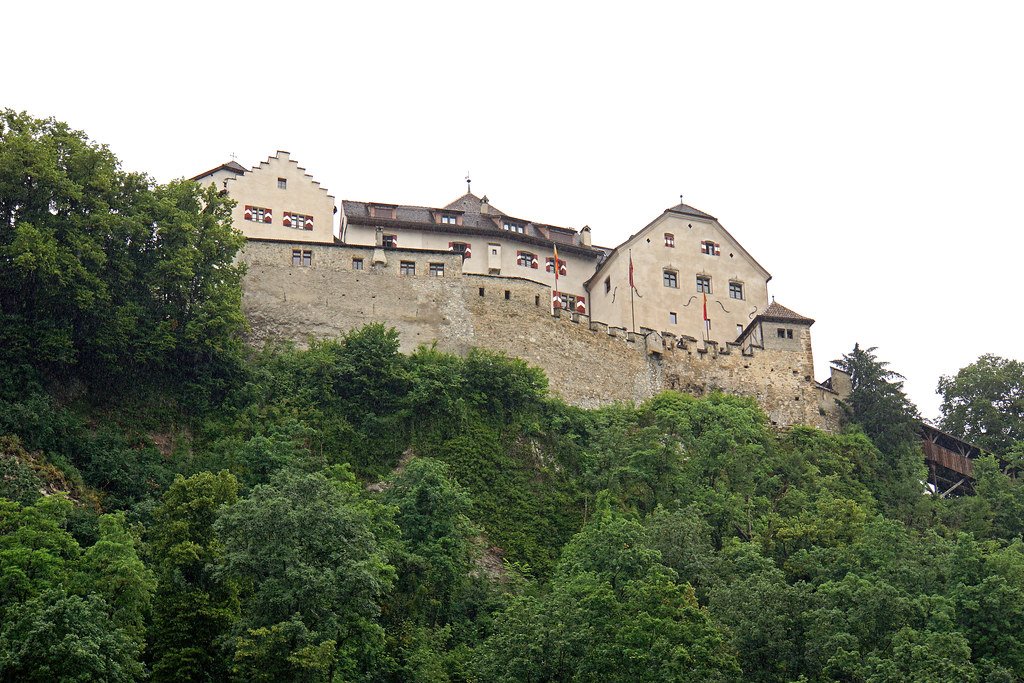
If you are coming to Liechtenstein to study, you will be drawn into a culture that is characterized by some of the most beautiful mountain landscapes in Europe, as well as one of the highest standards of living in the world – including an internationally respected education system such as the University of Liechtenstein. But if you come to Liechtenstein to study, the strictness of the health care system may also serve as a reminder of reality very quickly.
It is essential that you have health insurance when you move to Liechtenstein. Not having health insurance could put your status of residence at risk, it may cost you an enormous amount of money to pay for medical treatment yourself, or it may delay your registration at university.
If you are a single student with just a small bag packed and ready for travel, or if you are a family who has moved to Liechtenstein along with your partner (spouse) and/or children, it is important to understand how this all works. The information in this guide outlines what applies, explains your options, and provides practical advice on finding suitable insurance.
1. The Core Legal Reality: Who Must Insure?
In the Principality of Liechtenstein, it is not up to you whether or not to take out private health insurance. The government controls it via the Health Insurance Act (Gesundheits-Versicherungs-Gesetz) (or KVG) — so that anyone living in the Principality for longer than three months has a legal obligation to obtain compulsory basic health insurance (OKP).
Liechtenstein’s Office for Health (Amt für Gesundheit) oversees the entire health care system, thus providing consistency in quality and financial support for all providers.
However, as an international student, what your exact needs will be are determined largely by two things: your nationality and how long you plan to remain in the country.
[Your Nationality & Stay Duration]
|
+————-+————-+
| |
[EU/EEA Citizen] [Non-EU/EEA Citizen]
| |
Hold a valid EHIC? Must purchase private
| recognized insurance
+—–+—–+ or local KVG policy.
| |
[Yes] [No]
| |
Eligible for Must buy
exemption* local/private.
*Exemptions must be formally approved by the Amt für Gesundheit.
2. What to Check First: The Nationality Divide
Before looking at prices, you must establish your legal category. This step determines your entire insurance strategy.
The EU/EEA Route (The EHIC Baseline)
If you hold citizenship in an EU/EEA country or Switzerland, you likely carry a European Health Insurance Card (EHIC).
- The Rule: You can use your EHIC to satisfy the visa requirements, but only if it remains valid for your entire period of study.
- The Catch: The EHIC is designed for temporary stays. It only covers medically necessary, unplanned state healthcare. If your EHIC expires mid-semester, or if your home country’s social security office revokes it because you relocated your primary residence, you will immediately fall out of compliance.
- The Limitation: The EHIC only covers what a local basic insurance plan covers. In Liechtenstein, patients pay significant out-of-pocket shares. Furthermore, the EHIC will not pay a single franc toward your flight home in a medical emergency.
The Non-EU/EEA Route (Third-Country Nationals)
If you come from outside the EU/EEA (for example, the US, India, or Canada), you do not have access to the EHIC system.
- The Rule: You must prove you have adequate private health insurance to secure your student visa.
- The Catch: Your home country’s private policy will not automatically work. The Office of Health must review and formally approve your policy. It must cover the exact same scope of benefits as the Liechtenstein KVG, including high limits for inpatient and outpatient care.
- The Action Plan: You must secure a policy that explicitly states it meets the Liechtenstein KVG requirements, or buy directly from a government-licensed local provider.
3. The Trusted Providers: Liechtenstein’s Licensed Insurers
If you need to buy local insurance, you cannot simply choose any international brand online. Liechtenstein restricts mandatory health insurance to a tiny group of licensed, highly regulated providers.
The official list of licensed insurers managed by the Amt für Gesundheit includes exactly three companies:
- CONCORDIA
- SWICA
- FKB
Because these companies must comply with the KVG, they all offer the exact same basic package (OKP) with identical medical coverage. The law regulates these benefits strictly. However, they differ in customer service quality, English-language support, digital app features, and the pricing of their supplementary (Zusatzversicherung) policies.
4. Coverage to Compare: The Vital Extras
Many students make the mistake of looking only at the price tag of basic insurance. This is a risky strategy. Basic coverage in Liechtenstein leaves massive gaps that can cause financial ruin if things go wrong.
+———————————–+———————————–+
| Covered by Basic Insurance (OKP) | Typically Excluded (Needs Extras) |
+———————————–+———————————–+
| General practitioner visits | Medical evacuation to home country|
| Public hospital ward treatment | Repatriation of remains |
| Approved prescription medications | Emergency dental treatment |
| Limited maternity care | Search and rescue (e.g., skiing) |
| Basic physical therapy (referred) | Private/Semi-private hospital ward|
+———————————–+———————————–+
The Repatriation Gap
If you fall seriously ill and/or are unable to stay abroad (in other words if you must be medically transported) back to your home country, the cost of such transportation can be extremely high. Health insurance provided by the government in Liechtenstein does not pay for repatriation. As an international student, it is crucial that a traveler’s/repatriation rider be added as part of your international health plan, this rider is a necessary safety net.
Dental and Physical Therapy
Standard insurance will cover a few of the costs associated with dental care, but only in the event of an extreme, unavoidable disease, or as a result of a major injury. The cost for getting a filling, pulling out a wisdom tooth, or having a root canal done are all going to be your responsibility. If you have fragile teeth, or participate in activities that may cause impact to the mouth (high-impact) purchasing supplemental dental coverage can help protect you financially.
Personal Liability and Baggage
Although they are primarily non-medical, some of these student-specific insurance plans include medical coverage as part of personal liability (Privathaftpflicht) protection. Having personal liability insurance is considered standard practice in Central European countries. When renting an apartment or even when skiing in Malbun, if you cause accidental property damage to your rental unit, it would be your financial responsibility to pay the damages.
5. Single vs. Family Needs: Tailoring Your Strategy
Your demographic status changes your insurance priorities completely. A single 22-year-old student has wildly different needs than a master’s student relocating with a partner and two young children.
The Single Student Persona
- The Priority: Keeping premiums low, ensuring rapid visa approval, and maintaining a simple digital claims system.
- The Strategy: Choose a larger Deductible (Franchise) . A Deductible (or “Franchise”) is an annual out-of-pocket cost that you have to pay before your health insurance takes over. In Liechtenstein, there is a minimum yearly Adult Deductible of CHF 500; however, you may be able to raise this number to reduce your monthly premium costs. If you are relatively healthy, selecting a larger Deductible, along with purchasing one of the lower-cost Basic Compliant Plans will help you achieve the lowest cost.
The Family Persona
- The Priority: Low, predictable out-of-pocket costs, comprehensive pediatric care, robust maternity rules, and seamless coverage for all family members.
- The Strategy: Choose the lowest possible deductible for all family members. Children in Liechtenstein are treated differently under the KVG; their basic insurance premiums are heavily subsidized, and they are exempt from the standard deductible.
- The Family Warning: Do not assume a single policy automatically covers your family. Each family member, including newborns, must be registered with their own individual policy. You must verify whether your spouse is permitted to work; if they find a local job, their insurance setup might change, as some employers offer accident insurance coverage directly.
6. How the Cost-Sharing System Works
To avoid unexpected bills, you must understand the two-tier cost-sharing system in Liechtenstein: the Deductible (Franchise) and the Co-payment (Selbstbehalt).
- The Franchise (Deductible): This is the fixed amount you pay first. For adults, the legal minimum is CHF 500 per calendar year. You must pay the first CHF 500 of your medical bills yourself.
- The Selbstbehalt (Co-payment): Once you have paid your entire Franchise, you still do not get free healthcare. You must pay 10% of every medical bill that exceeds your deductible. This co-payment is capped at CHF 800 per year for adults.
Let’s look at a real-world example:
Imagine you have a medical bill of CHF 2,500 for a minor outpatient procedure, and you have chosen the standard CHF 500 deductible.
If you are a family, these numbers multiply per adult. Budgets can take a heavy hit if you do not plan for these potential expenses.
7. Direct Provider Comparison: Customer Experience Matters
Because the three main providers (CONCORDIA, SWICA, FKB) offer the exact same basic medical benefits under the KVG, your decision should come down to customer service quality and digital accessibility.
CONCORDIA
- Pros: Excellent, highly rated customer portal and mobile app. They have physical offices in Vaduz, making in-person consultations easy. They are highly experienced in dealing with cross-border workers and foreign students.
- Cons: Supplementary dental and travel premiums can be slightly higher than competitors.
SWICA
- Pros: Consistently wins national awards for customer satisfaction. They offer an outstanding telemedicine model (telmed). If you call their medical hotline first before visiting a doctor, you receive a discount on your monthly premium.
- Cons: Their English communication can sometimes be less comprehensive in written documents compared to their spoken support.
FKB (Freie Krankenkasse Balzers)
- Pros: A deeply rooted, local Liechtenstein provider. Highly personal service. They understand the local system inside and out.
- Cons: Their digital tools and app interfaces can feel a bit more traditional compared to the larger Swiss-based networks of CONCORDIA and SWICA.
8. Side-by-Side Comparison Checklist
Use this comparison checklist to evaluate policies side-by-side depending on your personal situation.
| Selection Metric | Single Student Plan | Family Plan |
| Primary Financial Goal | Minimize monthly premium costs. | Maximize cost predictability. |
| Recommended Deductible | High (e.g., CHF 1,500) if healthy. | Low (CHF 500) for adults; CHF 0 for kids. |
| Repatriation Coverage | Critical. Must be added via supplement. | Critical. Ensure all members are covered. |
| Pediatric & Maternity | Usually irrelevant. | Vital. Check waiting periods for maternity. |
| Accident Coverage | Include in policy (unless working 8+ hrs/wk). | Include for all non-working members. |
| English App Support | Highly preferred for quick claims. | Highly preferred for tracking multi-member bills. |
9. The 5 Essential Questions to Ask Before You Buy
Before signing any contract, copy and paste these five questions into an email to your prospective insurance agent. Their written answers will protect you from future legal and financial disputes.
1. “Does this plan satisfy Liechtenstein’s mandatory insurance rules for my specific residence status?”
- Why ask this: You need written proof that the policy complies with the KVG. This email confirmation will be your safety net if the Office of Health initially flags your visa application.
2. “Is this policy valid for my entire planned study period, and can it be easily extended if my studies run late?”
- Why ask this: Some private student policies have a hard cap on duration (e.g., maximum 2 or 3 years). You do not want your coverage to vanish while you are writing your final thesis.
3. “Are medical evacuation, search and rescue, and repatriation of remains fully covered, and what are the exact financial limits?”
- Why ask this: These three elements are the most expensive gaps in basic insurance. If the limits are too low (for example, capped at only CHF 5,000), a helicopter rescue from a ski slope will still leave you with a massive bill.
4. “Can I add my spouse and children to this policy under a unified billing account, and what are the individual premiums and deductibles for each person?”
- Why ask this: You must see the exact financial breakdown. Some companies offer family discounts on supplementary packages, while others charge flat rates per person.
5. “What are the exact exclusions, deductibles, and steps to file a claim? Do you accept digital document uploads in English?”
- Why ask this: You do not want to mail paper receipts written in German to a physical office if you can simply scan and upload them via a smartphone app. Clear claims processes save hours of administrative headache.
References:
- Student Insurance Portal. (n.d.). Insurance for students studying in Liechtenstein. https://studentinsuranceportal.com/to/liechtenstein
- Liechtensteinische Landesverwaltung. (n.d.). Health insurance companies. https://www.llv.li/en/individuals/health-care-and-care/insurance/health-insurance/health-insurance