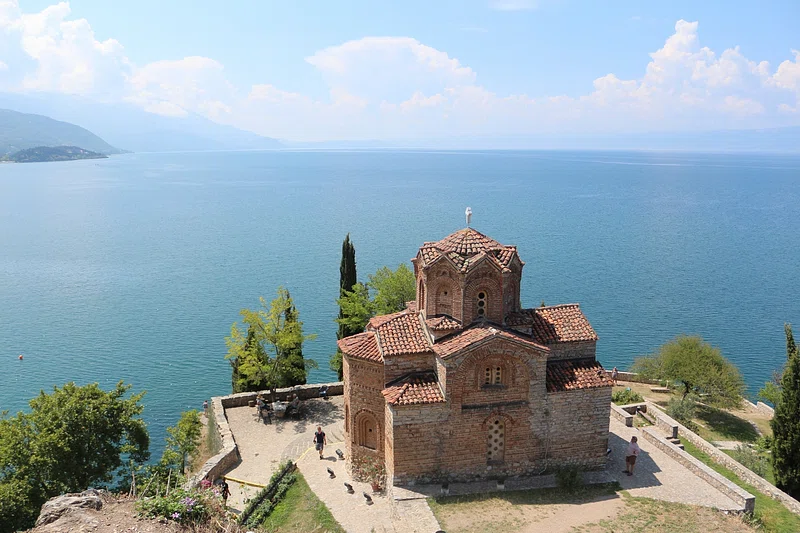
The journey of studying abroad is an experience that will last a life time. North Macedonia offers a history of great cultural significance, beautiful lake scenery and increasing global recognition as an educational center. North Macedonia’s attractiveness to international students is on the rise. However, prior to immersing yourself into the culture of Skopje and the serenity of Ohrid, you have to complete one essential, but often overlooked, bureaucratic process. This process includes obtaining health insurance while studying in North Macedonia. Navigating the healthcare system in a new country can be a daunting task. There are many variables involved in navigating healthcare systems. One wrong step may result in unnecessary financial burden from out-of-pocket costs due to a minor medical issue. The purpose of this detailed guide is to clarify and simplify the purchasing process of health insurance in North Macedonia. It will outline the specific requirements you should search for when purchasing health insurance for your needs; it will also describe the interactions with international health insurance plans purchased by expatriates living in North Macedonia. Lastly, we will include multiple lists of action items and checklist to help ensure you and your family members are adequately insured throughout your stay in North Macedonia.
The Direct Answer: What Should You Prioritize?
If you are looking for the quick bottom line, here it is:
For any international student—whether traveling single or with family—your priority must be securing a policy that satisfies official visa and university requirements, includes medical evacuation and repatriation, offers clear access to private local care (ideally through direct billing), and plugs the gaps of the local public health system.
Do not settle for a basic travel policy. You need a dedicated international student health insurance plan or an expat medical policy that covers you from day one.
1. Understanding the Dual Healthcare System in North Macedonia
Before diving into policies, it helps to understand how healthcare works on the ground in North Macedonia. The country operates a dual healthcare system: public and private.
The Public System and the FZOM
The public healthcare system is administered by the state-owned Health Insurance Fund of North Macedonia (Fond za zdravstveno osiguranje or FZOM). It is a centralized system funded largely through mandatory payroll contributions.
- Who is covered? Citizens, permanent residents, and foreigners with formal temporary residence permits who pay into the fund.
- The Reality: While FZOM covers a broad range of services, the public system faces challenges. Public facilities often grapple with underfunding, long wait times, and administrative bottlenecks. Furthermore, most public healthcare staff may not speak fluent English, which can make a stressful medical situation even more difficult to navigate.
The Private System
To bypass long waits and language barriers, many locals and almost all expats rely on private clinics and hospitals.
- The Standard of Care: Private hospitals in Skopje, such as Acibadem Sistina and Zan Mitrev Clinic, offer world-class, Joint Commission International (JCI)-accredited medical care. The staff are highly trained, English is widely spoken, and the facilities are state-of-the-art.
- The Catch: Private care is not covered by the public FZOM unless you have a highly specific referral (which is difficult to get). This means you must pay entirely out-of-pocket or rely on a private international insurance policy that explicitly partners with these local private clinics.
2. Key Factors to Check Before Buying Your Policy
Do not purchase the first cheap policy you find online. Use these eleven key dimensions to critically evaluate potential health insurance plans.
1. Visa and University Minimums
Your Health Insurance Policy is Required to Obtain a Temporary Residence Permit (Student Visa) in North Macedonia
Exchange Programs to North Macedonia typically require their participants to have an International Student Health Plan which has a minimum coverage amount of $32,000 US Dollars ($32,000/€30,000) per year for Medical Emergencies and Repatriation to the participant’s home country. Confirm this information from either your University’s International Office or from the closest North Macedonian Embassy before you purchase your student health plan. The cost difference in your student health plan may be just a few dollars but it could mean immediate denial of your student visa.
2. Scope of Essential Coverage
A good plan does not just cover accidents. It should cover your day-to-day well-being. Ensure your policy includes:
- Inpatient Care: Hospital stays, surgeries, and intensive care.
- Outpatient Care: Doctor visits, specialist consultations, and diagnostic tests (such as X-rays and blood tests).
- Prescription Medication: Out-of-pocket costs for drugs prescribed by a licensed physician.
- Mental Health: Therapy sessions and psychiatric support, which are vital for students dealing with the stress of cultural relocation.
- Maternity Care: Crucial if you are a student arriving with a spouse and planning to expand your family.
3. Evacuation and Repatriation
This is an absolute necessity. If you have a serious illness or injury which cannot be handled in the local area, you will need medical evacuation.
Repatriation is the cost for bringing you back to your own home nation. It also includes repatriating your body in case of your untimely demise. Services like this can run hundreds of thousands of dollars without being included in your policy.
4. Pre-Existing Conditions
Do you have a chronic illness such as asthma, diabetes, or thyroid?
Most standard international travel insurance plans include exclusions of pre-existing conditions. If you take regular medicine, or need to see your doctor regularly, look at an insurance policy with a waiver option, or rider option, for pre-existing conditions. The waiting time is often 12-24 months from the date of purchase before insurance will cover any medical expense. They also could charge a little bit more than normal.
5. Geographical Limits
Where does your policy apply? Some policies are strictly local; i.e. they only provide coverage while you are within the borders of North Macedonia.
North Macedonia is located in the middle of the Balkans. While it is unlikely that you will spend all your holiday time on weekends driving through roads in neighboring countries such as Greece, Albania and Bulgaria, or deeper into the Schengen Zone, look for a policy with “Europe-wide” or “Worldwide excluding USA/Canada” coverage. This gives you peace of mind during weekend road trips.
6. Network and Direct Billing
This is the single most important factor for your day-to-day convenience.
- The Reimbursement Model: You pay the doctor out-of-pocket, collect invoices, submit them online, and wait weeks to get your money back.
- The Direct Billing Model: The hospital bills your insurance company directly. You walk out of the clinic without opening your wallet, except perhaps to pay a small copay.
Prioritize insurers that have active direct-billing agreements with top private facilities in North Macedonia like Acibadem Sistina or ReMedika.
7. Claims Process and Customer Support
Imagine you wake up at 3:00 AM on a Sunday with severe stomach pains. You would prefer not to have to contact your insurance provider who has limited hours of operation during standard working hours in a different country from yours.
Choose an insurer who provides 24 hour a day, 365 days a year support in English. With many modern insurers offering telemedicine services, you can consult with an English speaking physician via video conference before visiting a clinic.
8. Cost, Excess, and Deductible Balance
It can be tempting to fall into a trap of low prices when it comes to monthly payments for health care but you have to consider the deductable (also called excess) as well.
The deductable is how much you will pay out of pocket before the cost of your insurance kicks in. For example, if you had an annual deductable of €500 and you went to see your doctor and they charged you €150, that means you would be responsible for all of those charges.
There needs to be balance. As a cash strapped student, having a small increase in your monthly payment with a $0 deductable could help protect you from some future financial shock.
9. Policy Flexibility and Duration
Academic timelines may be altered. You may choose to remain on campus for a summer research opportunity, or there could be an issue with your visa processing time.
Your policy should be easy to extend online. In addition, when you are bringing dependents (spouse or children) as part of your academic journey, ensure that your policy is able to add them easily under a family plan arrangement.
10. Local Social Insurance Interaction
If you get a temporary resident’s card (also known as a “temporary residence” or “residence permit”), then in theory, you can apply for health insurance. To do that, however, is a very involved process including registering with local authorities, obtaining a tax number, and paying each month.
Even after registering for the local FZOM, you will need an international private plan until they allow you into their system.
11. Exclusions and the Fine Print
Read the policy exclusion list very carefully. Standard exclusions often include:
- Extreme Sports: Skiing in Mavrovo or paragliding in Kruševo might not be covered under a standard plan unless you purchase an adventure sports rider.
- Elective Procedures: Non-emergency treatments and cosmetic surgeries.
- Routine Dental & Vision: Most basic plans only cover emergency dental pain relief. If you need regular teeth cleanings or new glasses, you will need to pay extra or buy a premium tier.
3. Practical Checklist: Compare Plans Side-by-Side
When you are comparing specific plans, copy this checklist into a spreadsheet to evaluate your options systematically:
| Comparison Metric | Plan A: _________________ | Plan B: _________________ | Plan C: _________________ |
| Meets visa/university minimums? | [ ] Yes [ ] No | [ ] Yes [ ] No | [ ] Yes [ ] No |
| Emergency & repatriation included? | [ ] Yes [ ] No | [ ] Yes [ ] No | [ ] Yes [ ] No |
| Direct billing network in MK? | [ ] Yes [ ] No | [ ] Yes [ ] No | [ ] Yes [ ] No |
| Pre-existing conditions covered? | [ ] Yes [ ] No | [ ] Yes [ ] No | [ ] Yes [ ] No |
| Family/dependent coverage available? | [ ] Yes [ ] No | [ ] Yes [ ] No | [ ] Yes [ ] No |
| 24/7 English support & telehealth? | [ ] Yes [ ] No | [ ] Yes [ ] No | [ ] Yes [ ] No |
| Monthly Premium Cost | €_________ | €_________ | €_________ |
| Deductible / Excess Amount | €_________ | €_________ | €_________ |
4. Real-World Scenarios: Choosing the Right Strategy
Let’s look at how two different student profiles should approach their health insurance strategy in North Macedonia.
Scenario A: The Single Student (9-Month Exchange)
- Profile: Ana, a 21-year-old exchange student from Spain, is spending two semesters at a university in Skopje. She is young, healthy, and has no pre-existing conditions.
- The Strategy: Ana needs a straightforward international student plan.
- Coverage Target: It must meet the €30,000 Schengen-adjacent visa standard and include repatriation.
- Geographical Area: She should choose a policy that covers all of Europe. This allows her to travel freely through neighboring Greece and Serbia during academic breaks.
- Execution: A deductible of €50 or €100 is acceptable to keep her monthly premiums low, provided she has a small emergency fund to cover basic costs if she catches a seasonal flu.
Scenario B: The Graduate Student with Family (2-Year Master’s Program)
- Profile: Marcus, a 29-year-old postgraduate student, is moving to North Macedonia for a two-year Master’s program. He is bringing his spouse and their 4-year-old daughter.
- The Strategy: Marcus needs a comprehensive family international health insurance plan.
- Coverage Target: The plan must include pediatric outpatient care, childhood vaccinations, and emergency coverage for all three family members. Since public clinics in North Macedonia can be crowded, having guaranteed access to top-tier private clinics (like Sistina) is crucial for their peace of mind.
- Execution: Marcus should prioritize a plan with a €0 deductible and robust direct billing. If his child gets sick in the middle of the night, the last thing he needs is to worry about having enough local currency (Macedonian Denar) to pay a private hospital up-front.
Secure Your Peace of Mind
Health Insurance seems like a mundane or bureaucratic process. It is however the basis for a productive Study Abroad experience. With the right coverage, your day-to-day health costs are covered, as well as access to the very best private medical care available in North Macedonia, while protecting your wallet and your health.
Sort out your insurance as soon as possible. After all the paper work is completed, you will be able to concentrate on what really counts: your studies, new friends, and all the wonderful things that North Macedonia has to show.
References:
- Euraxess North Macedonia. (n.d.). Health/medical care. https://www.euraxess.mk/north-macedonia/information-assistance/healthmedical-care
- University of Tetova / University of Tetovo? I should be careful here: the source title shown is Insurance, and the page is from the University of Tetova? Actually the URL provided in the chat is from the University of Tetovo domain. The citation as captured from the source is:
- University of Tetova. (2018, August 29). Insurance. https://www.utms.edu.mk/en/inbound-mobility/insurance
- International Medical Group. (n.d.). International student insurance. https://www.imglobal.com/international-student-insurance
- Indigo Expat. (2025, January 27). International health insurance Macedonia for expatriate. https://indigo-expat.com/en/informations/country-guide/international-health-insurance-expatiates-macedonia/
- Allianz Care. (2026, January 13). International student health insurance. https://www.allianzcare.com/en/personal-international-health-insurance/who-we-help/students.html