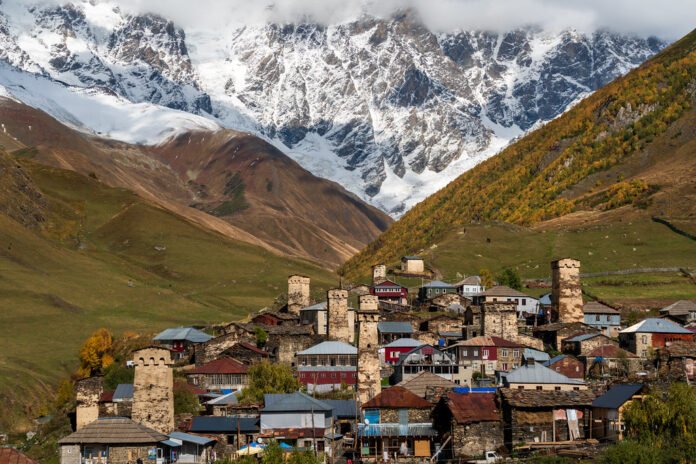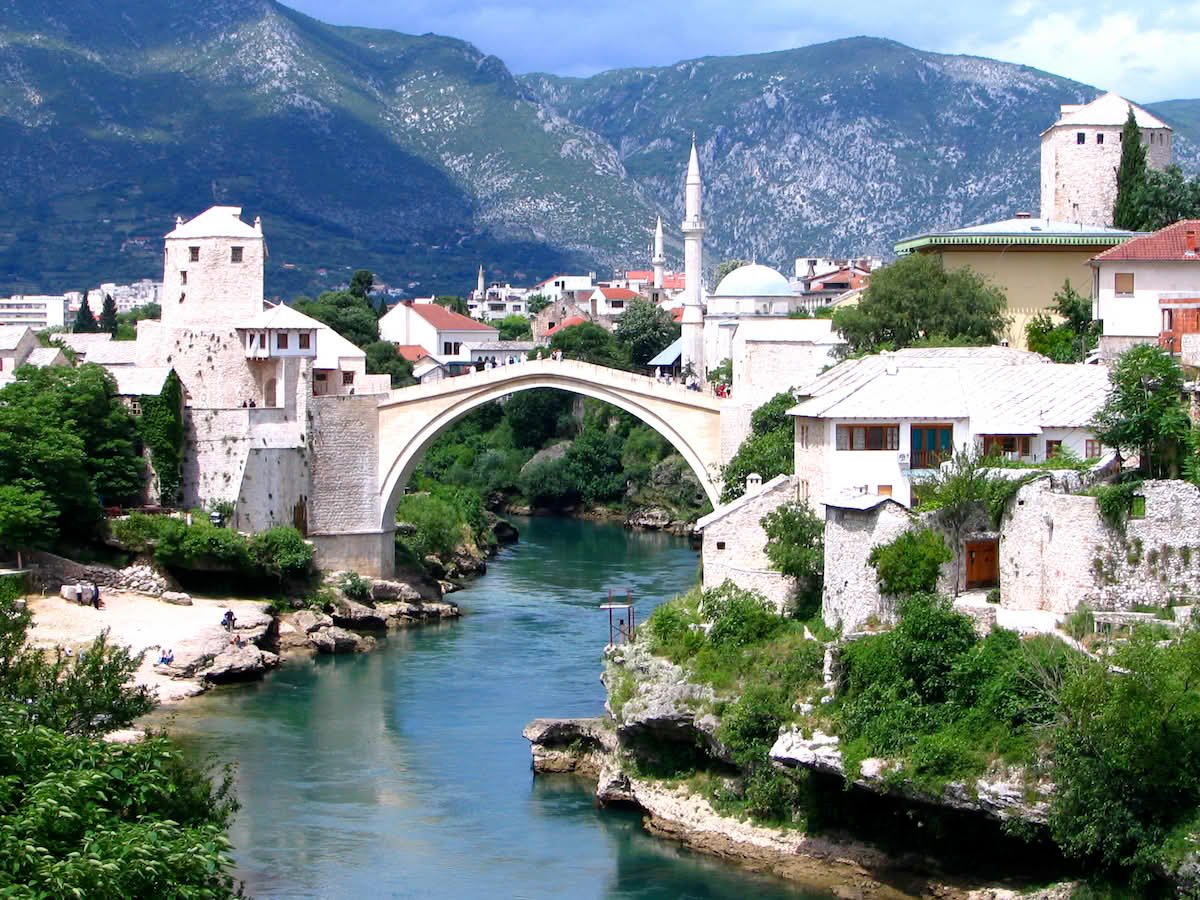
Welcome to Bosnia and Herzegovina; studying here is an amazing experience. You’ll find rich history in the cobblestone streets of Sarajevo, beautiful architecture in the stone bridges of Mostar and many other great places. There are also good opportunities for study. However, you have to get through one difficult bureaucratic process. Before you start learning about student life, you’ll have to apply for a temporary residence permit (Privremeni Boravak) .
A Privremeni Boravak requires that you have a valid Health Insurance Policy. This is a regulatory necessity. When you apply for a Privremeni Boravak, the Service for Foreigners’ Affairs will scrutinize your health policy. If it does not conform to the Service’s exacting criteria, your Privremeni Boravak application will be stalled.
So what do you do now? Do you sign up for the country’s public health service, or do you buy a private health insurance policy? Finding a way out of this dilemma could seem daunting. For individual students from abroad or families who accompany them to study, finding a suitable option may appear almost insurmountable. First, you should think about compliance. Following close behind would be the depth of coverage, the scope of your network of providers, and how easy it is to file claims.
Here we present step-by-step information that will allow you to successfully navigate this complicated bureaucracy. We will provide analysis of all of your options and explain exactly what requirements exist for each option.
1. The Bosnian Healthcare System: An Overview
The healthcare landscape in Bosnia and Herzegovina is highly decentralized. The country is split into political entities, and the Federation of Bosnia and Herzegovina is further divided into ten distinct cantons. Each canton operates its own Public Health Institute, known as Zavod zdravstvenog osiguranja (ZZO).
[ Bosnia & Herzegovina Healthcare ]
|
+———————-+———————-+
| |
[ Public Health System (ZZO) ] [ Private Health Insurance ]
| |
– Cantonal structure (decentralized) – Local private insurers (e.g., UNIQA)
– Budget-friendly, basic coverage – International expat policies
– Access to public hospital networks – Direct-billing at private clinics
As an international student, your university rules dictate your insurance pathways. Institutions like the University Džemal Bijedić of Mostar (UNMO) and the International University of Sarajevo (IUS) have clear, established frameworks for foreign scholars. Typically, you can choose between two main routes:
- The Public Health Institute (ZZO): This path provides access to the state-run medical system. It is highly affordable and represents the baseline of local coverage. Sometimes, if you are studying on an official state or university scholarship, your scholarship provider will pay these fees directly. If not, you must pay the public premium yourself.
- Private Insurance Companies: This route involves buying a policy from a commercial insurer. You can choose a local Bosnian provider, such as UNIQA or Croatia Osiguranje, or select an approved international provider. Private policies offer quicker access to specialists and English-speaking doctors, but they require careful analysis of their policy limits.
Do not assume a plan that worked for a student in another European country will work here. Your policy must be explicitly valid within the borders of Bosnia and Herzegovina. Let us look at what you need to check before paying a single deposit.
2. Six Essential Elements to Verify Before You Buy
Choosing a plan on price alone is a dangerous strategy. A cheap policy might save you money today but leave you with massive out-of-pocket bills tomorrow. To protect your health and your visa status, evaluate every policy against these six critical benchmarks.
I. Coverage Validity and Study Extensions
Your health insurance must be valid for the entirety of your academic study. For example, if you are enrolled in an academic program that runs for ten months (e.g., from September through June), you should purchase a ten month policy, rather than purchasing a nine month policy. Furthermore, your health insurance must also accommodate you when you have extended your studies, or there has been a delay in renewing your visa.
II. Strict University Alignment
All public institutions of higher education in Bosnia and Herzegovina have their own sets of administration regulations. In addition, some Universities keep a list of approved providers. The International Relations Office at UNMO will frequently point out incoming students to specific locations such as the UNIQA Service Center in Mostar.
Contact your University’s International Relations Office via email before you decide on an outside policy. Ask them directly if they can use your preferred provider.
III. Emergency, Repatriation, and Specialty Exclusions
Many entry-level student insurance plans look great on paper but contain severe exclusions. Read the fine print carefully. Your policy must cover:
- Emergency Hospital Treatment: Immediate care for sudden, severe illnesses or accidents.
- Ambulance Services: Transport to the nearest equipped public medical facility.
- Prescription Medications: Drugs prescribed during your treatment.
- Medical Repatriation: The costly process of transporting you back to your home country for long-term medical care in an emergency.
Many basic travel policies exclude repatriation completely. If you lack this benefit, your family could face devastating financial liability in a worst-case scenario.
IV. Financial Limits, Deductibles, and Co-pays
An insurance policy is only as good as its financial limits. You must understand how much of the bill you are expected to pay.
- The Annual Cap: This is the maximum amount the insurer will pay during the policy year. Ensure this cap is high enough to cover major surgery.
- The Deductible: This is the initial amount you must pay before the insurance kicks in. A high deductible lowers your monthly premium but increases your financial stress during a medical event.
- Co-pays: This is the percentage of each medical bill you must cover out-of-pocket. Ideally, look for a policy with
deductible and low, predictable co-pays.
V. Clinic Network Access and Pre-approval Rules
Where do you really go when you are sick? Private insurance companies work with very limited numbers of private clinics and public hospitals. If you see a physician that is not in that network, they will expect you to pay for all of their services.
Also, read about what is called “pre-authorizations” on your policy. Many insurance plans require that you first contact an insurance company (the hotline) before seeing a specialist or going to a hospital. If you fail to contact them before your treatment, the insurer may refuse to reimburse you.
VI. The Claims Process: Direct Billing vs. Reimbursement
The way that most student health plans work is when you visit a physician or other healthcare provider, you will have to use your own money to pay for care. Afterward, you will need to fill out some paperwork, send it to your insurance company with all of your medical bills (the receipts), and then wait to see if they will reimburse you. The majority of student health plans do this so that you can be able to afford the cost of an urgent trip to the doctor.
3. Tailoring Your Choice: Single Student Needs
When you are going to Bosnia and Herzegovina by yourself, it will be easier to get what you need. The cost of pediatric and maternity coverage is so high. Your priority will be finding an insurance package that can satisfy the foreigner’s affairs office, help with emergency situations, and fit your low income as a student.
A local, private insurance policy is the best option for a single student. The price of these policies is extremely cheap (around €30 to €50 per year) when bought directly from a city such as Sarajevo or Mostar. Local insurance companies have created policies designed specifically to meet the minimal requirements of the local Foreigner’s Affairs Office.
If your university has partnered with a clinic, check if they offer some basic services. Often, your school may have an on campus clinic where you can visit for simple issues. If your school has a partnership with a clinic, then you only want to purchase a policy that covers serious emergencies, testing and referring specialists. Make sure your local insurance provider has a location close to your school. If you are attending school in Mostar, make sure there is a service center in Mostar. It makes things much easier to submit paper work and sign.
4. Scaling Up: Comprehensive Family Protection
If you are moving to Bosnia and Herzegovina with a spouse, children, or dependents, your insurance strategy must change. A basic, emergency-only student plan is highly risky for a family.
When managing family health, your priorities shift from low premiums to broad coverage depth. Children require frequent doctor visits, vaccinations, and pediatric consultations. If you rely on a basic, low-cost student policy, you will find yourself paying out-of-pocket for routine family care.
For family units, it is highly recommended to compare two distinct options:
- The Combined Approach: The primary student enrols in a university-arranged public plan (ZZO), while the dependents are covered by a local private family policy. This can be cost-effective, but managing two different systems is administratively exhausting.
- The International Expat Policy: Purchasing a single, comprehensive international family policy from an expat insurer. These plans are more expensive, but they offer significantly higher financial limits, direct billing at top private clinics, robust maternity and pediatric coverage, and global medical repatriation.
For families, the peace of mind offered by higher caps and direct billing is worth the premium. Do not compromise on coverage depth when your children’s health is on the line.
5. Assessing Provider Reputation and Local Usability
An insurance policy is more than a PDF document. It is a real-world contract that you must use during a stressful medical event. To evaluate a provider’s reputation, look past their marketing brochures and focus on these three indicators of reliability.
The Power of a Local Physical Network
Does the insurer have physical offices in your city of study? If you study in Mostar but your insurer only has a single office in Banja Luka, you will face communication delays. Choose a company with a visible, accessible local branch. If you need to verify a document for the immigration authorities, walking into a local office is much faster than waiting for an email response.
Clear English-Language Policy Documents
Bosnia has a very complicated bureaucratic system. Thusly, if your insurance policy documents are solely in either Bosnian, Croatian, or Serbian language; you will likely be unable to determine the specific limits of your coverage. On the other hand, if your international health insurance policy is only issued in the English language, then local hospital staff may have difficulty processing it.
Therefore, an ideal provider would issue bilingual policy documentation for your use as well as for the use by local medical staff so that each understands their entitlements and coverage options without potential translation issues.
Responsive Customer Support and Direct Billing
When you are sick, you do not want to argue with an automated phone tree. Test the provider’s customer service before you buy. Call their helpline. Do they have English-speaking agents? How quickly do they answer?
Additionally, check their reputation for fast, predictable payments. A provider that delays payments will make local clinics hesitant to accept their insurance card, forcing you to pay cash upfront.
6. Practical Comparison: Single Student vs. Family Needs
To help you visualize your options, this table compares the critical factors you must weigh when choosing your health insurance strategy in Bosnia and Herzegovina.
| Factor | Single Student Policy | Family Policy |
| Average Premium | Usually lower (highly affordable local options). | Usually higher (reflects broader collective risk). |
| Core Operational Focus | Outpatient care, urgent care, and basic prescriptions. | Hospitalization, emergency services, and pediatric care. |
| Network Access | Focused on clinics near the campus or city center. | Broad network of adult and pediatric specialists. |
| Financial Limits | Standard caps are sufficient for typical young adults. | Higher caps are essential to protect multiple lives. |
| Claims Simplicity | Important, but a single student can manage delays. | Absolutely critical to prevent cash flow disruptions. |
| Key Added Benefits | Low-cost add-ons for dental or basic travel. | Maternity, pediatric, and robust medical repatriation. |
7. The Final Selection Rule
When it comes time for you to make your decision about which plan to choose, remember that there are two things that you should keep in mind: comply with the requirements of your University and take care of your own mental comfort.
There isn’t necessarily the “cheapest” option when looking at medical insurance options; instead, the best option will be the one that meets all the administration (regulatory) requirements from your University, has good emergency/hospital coverage and provides access to both a usable (local) network and clear, simple claims processes.
Don’t cut back on your medical protections just to save a little money. By choosing a strong, suitable medical protection plan, you protect yourself physically/health-wise as well as financially, and set the foundation for an excellent start to your academic experience in Bosnia & Herzegovina.
Ready to buy your policy? Send an e-mail to your University’s International Relations office requesting their approved list of Insurance Providers. With this list you’ll be able to easily evaluate each insurance option.
References:
- April International. (2024, November 13). Guide to international student health insurance. https://www.april-international.com/en/international-student-insurance/guide/guide-to-international-student-health-insurance
- International School of Sarajevo. (n.d.). Health insurance and medical services guideline (for international students only). https://iro.ius.edu.ba/health-insurance-and-medical-services-guideline-en
- Student Insurance Portal. (2004, January 31). Insurance requirements for studying in Bosnia and Herzegovina as an international student or PhD candidate. https://studentinsuranceportal.com/situation/international-student-or-phd-candidate/to/bosnia-and-herzegovina
- University of Mostar. (n.d.). Insurance. https://web-archive.unmo.ba/unmo.ba/en/insurance.aspx
- For the general APA formatting guidance used to prepare these references:
- Southern Cross University Library. (2020, January 13). Websites, webpages – APA 7th referencing guide. https://libguides.scu.edu.au/apa/websites
- Victoria University Library. (2015, August 22). APA 7th referencing: Sample reference list. https://libraryguides.vu.edu.au/apa-referencing/7SampleReferenceList