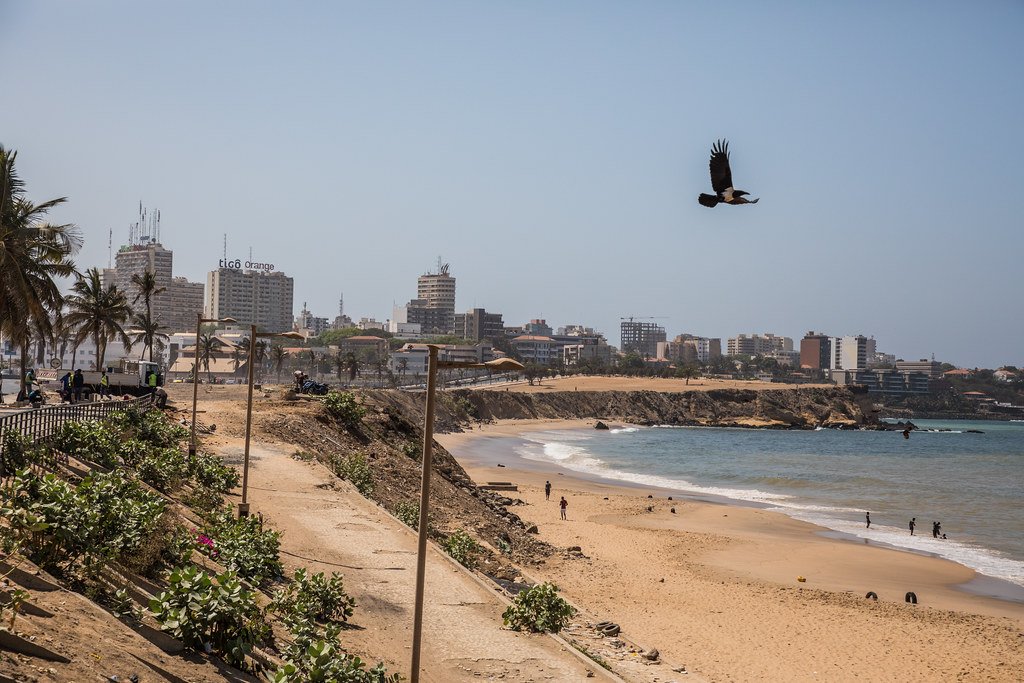
Relocating to Senegal can be very exciting. As a major cultural center and growing academic/professional hub in West Africa, Dakar offers much. In addition to these benefits, however, moving to a new country may present many obstacles. One of the biggest obstacles for many people is obtaining adequate health coverage. This applies equally well to students who are going on their own (i.e., students participating in study abroad programs) as it does to academics who are accompanied by their families. The health care system in Senegal is quite different from that found in other countries. Without a buffer zone to provide support during this time, navigating Senegal’s health care system could prove to be both costly and stressful.
The Direct Answer
How do you choose the right health insurance for Senegal?
Choose a provider that gives reliable emergency evacuation/repatriation, clear inpatient and outpatient limits, and straightforward claims/direct-billing for care in private Dakar clinics for both single students and families.
The Dakar Healthcare Reality: Why Your Choice Matters
To begin to understand how and why some particular insurance benefits will be important for your needs in Senegal, you need to have an understanding of what the medical scene is like there.
The WHO states that although Senegal has made significant strides in improving its population’s health statistics, it continues to have quality health care mostly centralized into the country’s capital city, Dakar.
In terms of providing public options for treating minor ailments, they do exist. However, expatriates, international students, and most professional families use Dakar’s large private clinic networks. Some examples of these include the Clinique de la Madeleine, Clinique du Cap, and Clinique Casahous. All three of these clinics provide a wide range of services including state-of-the-art diagnostics, high-quality treatments by doctors who speak English.
This level of service does come with a cost. As business entities, many times they demand that you provide them with either a deposit or advance payment for services prior to starting treatment. In emergency situations, you may end up having to pay thousands of dollars immediately upon arrival at the hospital. If you do not have a strong international insurance plan that allows for direct billing at the hospitals you visit, you may also face finding the money necessary for your emergency care.
14 Critical Insurance Factors to Compare
To avoid financial and logistical issues, you should evaluate potential policies against these fourteen key criteria.
1. Coverage Scope and Annual Limits
Always examine the overall annual maximum of the policy. For a single student, a plan capped at $100,000 might seem sufficient. However, medical inflation can quickly deplete this. For families, check whether the policy limits apply per person or as a family aggregate.
Look closely at sub-limits. A plan might advertise a $1 million lifetime limit but quietly cap outpatient specialist visits at a mere $500 per year. Ensure that hospitalization, basic outpatient care, prescription drugs, and diagnostics have generous individual caps.
2. Emergency Evacuation and Repatriation
Senegal’s private clinics are highly capable. Even so, they may not be equipped to handle complex neurosurgery, advanced neonatal care, or highly specialized trauma.
[Medical Emergency in Dakar]
│
▼
[Local Private Clinic] ──(Inadequate facilities?)──► [Aeromedical Evacuation]
│
┌─────────────────┴─────────────────┐
▼ ▼
[Casablanca, Morocco] [Paris, France]
Your policy must include explicit, high-limit coverage for aeromedical evacuation. This ensures transport to an appropriate referral country—most commonly Morocco (Casablanca), France (Paris), or South Africa. Understand the approval process. In an emergency, you cannot afford to wait days for a claims committee to authorize a flight.
3. Network and Direct-Billing
This is perhaps the most important day-to-day feature. Ask the insurer for their specific “in-network” list of Dakar clinics.
More importantly, confirm if they practice direct-billing. Direct-billing means the clinic bills the insurer directly, sparing you from paying out of pocket and submitting receipts later. In Senegal, where credit card processing can sometimes fail and cash is king, direct-billing is a vital safety net.
4. Waiting Periods and Pre-Existing Conditions
A waiting period is the time you must wait after buying a policy before you can claim benefits. This is common for maternity care, often ranging from 10 to 12 months.
If you or a family member have pre-existing conditions like asthma, diabetes, or hypertension, check how the insurer handles them. Some exclude them entirely, while others offer “medical underwriting” to include them for an additional premium. Families often require broader chronic-care coverage to ensure continuity of care.
5. Visa and Residence Requirements
To obtain a student visa or a Senegalese residence card (carte d’identité d’étranger), you must show proof of health insurance.
The Senegalese authorities require a formal confirmation letter. This document must state that your coverage includes repatriation of remains and medical evacuation. It should also ideally be written in French (or English with a certified translation). Ensure your provider can generate this letter immediately upon policy activation.
6. Cost-Sharing and Affordability
Do not choose a plan based solely on a low monthly premium. You must balance the premium against cost-sharing mechanisms:
- Deductibles: The flat amount you pay before the insurer pays anything.
- Co-pays: The percentage of each bill (e.g., 20%) that you must cover.
- Out-of-Pocket Maximum: The absolute limit on what you will pay in a year.
For families, calculate the worst-case scenario. Add the annual premiums to the maximum out-of-pocket limits for all members to find your true financial exposure.
7. Claims Process and Turnaround
When direct-billing is unavailable, you will have to pay first and claim later. For a student living on a tight budget, waiting three months for a $300 reimbursement is a significant burden.
Look for providers that offer digital claims submission via an app. Check reviews to see if their reimbursement turnaround is within 5 to 10 business days. Multi-language, 24/7 support is also essential when navigating timezone differences.
8. Provider Support and Local Assistance
Local knowledge is invaluable. Some international insurers partner with regional West African assistance companies. These local representatives can step in to help with hospital admissions, coordinate with doctors, and assist in sourcing specialized prescriptions.
Senegal occasionally experiences shortages of specific imported medications. A provider with a local presence can help coordinate the import or alternative sourcing of your required drugs.
9. Policy Portability and Duration
Are you planning to travel home during university holidays? Will you be taking weekend trips to neighboring countries like The Gambia or Cape Verde?
Ensure your policy remains active during these trips. Some student plans suspend coverage the moment you cross the border of your primary destination. Additionally, check if your policy can be easily extended if your studies run over schedule or if family members decide to join you later.
10. Policy Exclusions and the Fine Print
Read the general exclusions carefully. Standard policies typically exclude injuries sustained during high-risk activities, such as riding a scooter without a helmet (a common hazard in Dakar traffic).
Crucially, check the policy’s stance on political unrest or civil commotion. While Senegal is historically one of the most stable democracies in West Africa, occasional demonstrations do occur. You must ensure that injuries resulting from accidental exposure to protests are not excluded from your coverage.
11. Family-Specific Features
If you are relocating with family, your insurance needs change completely.
┌──► Newborn Coverage (From birth, no waiting period)
│
[Family Insurance Priorities] ────┼──► Dependent Age Caps (Typically up to age 18 or 26)
│
└──► Individual vs. Aggregate Deductibles
Ensure that any newborns are covered from the moment of birth without waiting periods. Check the age limits for dependent children (often capped at 18, or 26 if they remain in full-time education). Lastly, confirm whether family deductibles are aggregated or if each individual must meet their own deductible before coverage kicks in.
12. Mental Health and Sexual/Reproductive Health
Relocating to a new continent can be stressful. The cultural adjustment can take a toll on mental health.
Verify that your plan covers outpatient mental health counseling and specialist psychiatric consultations. Furthermore, confirm that sexual and reproductive health services—including routine STI screenings, contraception, and maternal care—are fully integrated into the policy.
13. Telemedicine and Preventative Care
For minor issues, traveling to a physical clinic in Dakar’s notorious traffic can be exhausting.
Many modern international insurers include 24/7 telemedicine services. This allows you to consult an English- or French-speaking doctor via video call for prescriptions, advice, or triage. Additionally, check if basic annual wellness checkups and routine vaccinations (such as typhoid or yellow fever boosters) are covered.
14. Rating, Solvency, and Local Presence
Your insurance is only as good as the company’s financial strength. Choose providers with solid global credit ratings (such as A.M. Best ratings of “A” or higher).
Well-established insurers like Cigna Global, Allianz Care, or AXA Global Healthcare have decades of experience navigating claims in West Africa. They are far less likely to dispute valid claims or experience liquidity delays when wire transfers are required.
A Practical Playbook: How to Choose and Evaluate Your Plan
When you are ready to evaluate policies, follow these concrete steps to make an informed choice:
- Get the Full Policy Wording: Do not rely on marketing brochures. Request the complete, multi-page policy contract and read the definitions and exclusions sections.
- Request a Sample Visa Letter: Ask the insurer to send you a sample of the certificate they provide for consular visa applications. Check that it clearly mentions “repatriation” and “evacuation.”
- Use the Scenario Test: Contact the insurer’s customer service and ask a highly specific scenario question: “If my child requires an emergency appendectomy at Clinique de la Madeleine in Dakar, will you issue a Letter of Guarantee (LoG) to secure immediate admission, or will I have to pay upfront?” Get their response in writing.
- Clarify Currency and Transfer Fees: Confirm if the insurer processes reimbursements in EUR or USD. Ask whether they cover foreign exchange conversion fees or intermediary bank wire fees, which can quickly erode your reimbursed funds.
- Establish a Chronic Medication Plan: If you require continuous medication, present the list of drugs to the insurer. Ask if they are covered under the routine pharmacy benefit and if they can be sourced locally in Dakar.
- Cross-Reference Consulate Rules: Check the specific Senegalese consulate website where you are applying for your visa. Some offices require a specific minimum coverage amount (e.g., €30,000) explicitly stated on your insurance certificate.
One Practical Illustration: Navigating the Trade-Offs
To put this into perspective, let’s examine a common choice faced by international students and young professionals moving to Dakar:
Option A: The Budget-Friendly Student Plan
- Monthly Premium: $45
- Deductible: $250 per claim
- Evacuation Limit: $50,000 (Requires complex prior approval)
- Direct-Billing: None (Reimbursement only)
- Outpatient Care: Excluded (Inpatient emergency only)
Option B: The Mid-Tier International Plan
- Monthly Premium: $120
- Deductible: $0
- Evacuation Limit: $500,000 (Fully managed by a 24/7 emergency desk)
- Direct-Billing: Yes, at major Dakar private clinics
- Outpatient Care: Covered (Including specialist visits and prescriptions)
The Real-World Scenario
You contract a severe, complicated case of malaria. You require three days of hospitalization, intravenous therapy, and specialized diagnostics at Clinique de la Madeleine. The total bill comes to $2,400.
- With Option A: The clinic refuses to admit you without a cash deposit. You must pay $2,400 out of pocket. After discharge, you submit a paper claim. It takes 60 days to process. After your $250 deductible is applied, you receive a refund of $2,150, minus bank wire fees.
- With Option B: You show your digital insurance card. The clinic contacts the insurer’s 24/7 hotline. A Letter of Guarantee is issued within an hour. You are admitted, treated, and discharged without paying anything. The insurer settles the bill directly with the clinic.
While Option A saves you money on premiums, Option B provides vital protection against stressful financial outlays during a medical crisis.
Senegal-Specific Health Insurance Comparison Template
When gathering quotes, use this structured template to compare your options side-by-side:
| Feature / Benefit | Option 1: [Name] | Option 2: [Name] | Option 3: [Name] |
| Annual Maximum Limit | |||
| Dakar Direct-Billing Network | (e.g., Madeleine, Cap, etc.) | ||
| Emergency Evacuation Limit | |||
| Deductible & Co-pay Structure | |||
| Outpatient Limit / Specialist Caps | |||
| Maternity Waiting Period & Limit | |||
| Pre-existing Conditions Covered? | (Yes/No/Underwritten) | ||
| Repatriation of Remains Included? | (Yes/No) | ||
| Visa Letter Provided in French? | (Yes/No) | ||
| Telemedicine Platform Included? | (Yes/No) | ||
| 24/7 Hotline Languages | (e.g., English, French) | ||
| Monthly Premium |
Pro Tips:
Securing the right health insurance is not just about checkmarks on a visa checklist. It is about peace of mind. Dakar is an incredible, energetic city, and your time there should be spent focusing on your studies, research, or career.
By investing a little time up front to analyze direct-billing arrangements, evacuation limits, and policy exclusions, you protect your health and your wallet. Choose a plan that matches your risk tolerance, keep your digital insurance card handy, and enjoy your journey to Senegal with confidence.
References:
- Compare Expat Plans. (2026, January 26). Health insurance for expats in Senegal (2025 guide). https://compareexpatplans.com/countries/senegal/insurance/
- ExpatAssure. (2025, July 13). Healthcare and expat health insurance in Senegal. https://www.expatassure.com/senegal/
- ExpatLife.Ai. (2026, March 22). Senegal healthcare guide (2026). https://expatlife.ai/senegal/healthcare
- Feather Insurance. (2026, May 14). Health insurance in Senegal for expats & foreigners. https://feather-insurance.com/en-sn/international-health-insurance-senegal
- International Santé. (n.d.). Expatriate health insurance in Senegal. https://www.international-sante.com/healthforexpats/expat-insurance/country/senegal/
- International Santé. (n.d.). Assurance santé expatrié au Sénégal. https://www.international-sante.com/assurance-expatrie/pays/senegal/
- Mondassur. (2026, April 16). Senegal insurance. https://www.mondassur.com/en/senegal-insurance/
- Mondassur. (2026, April 16). Health insurance for students in Senegal. https://www.mondassur.com/en/senegal-insurance/student-insurance-senegal/
- Pacific Prime. (2024, December 31). Senegal health insurance for expats. https://www.pacificprime.com/country/africa/senegal-health-insurance/
- VOA News. (2014, May 25). Low-cost health insurance soon available in Senegal. https://www.voanews.com/a/senegal-to-offer-better-health-insurance/1921145.html