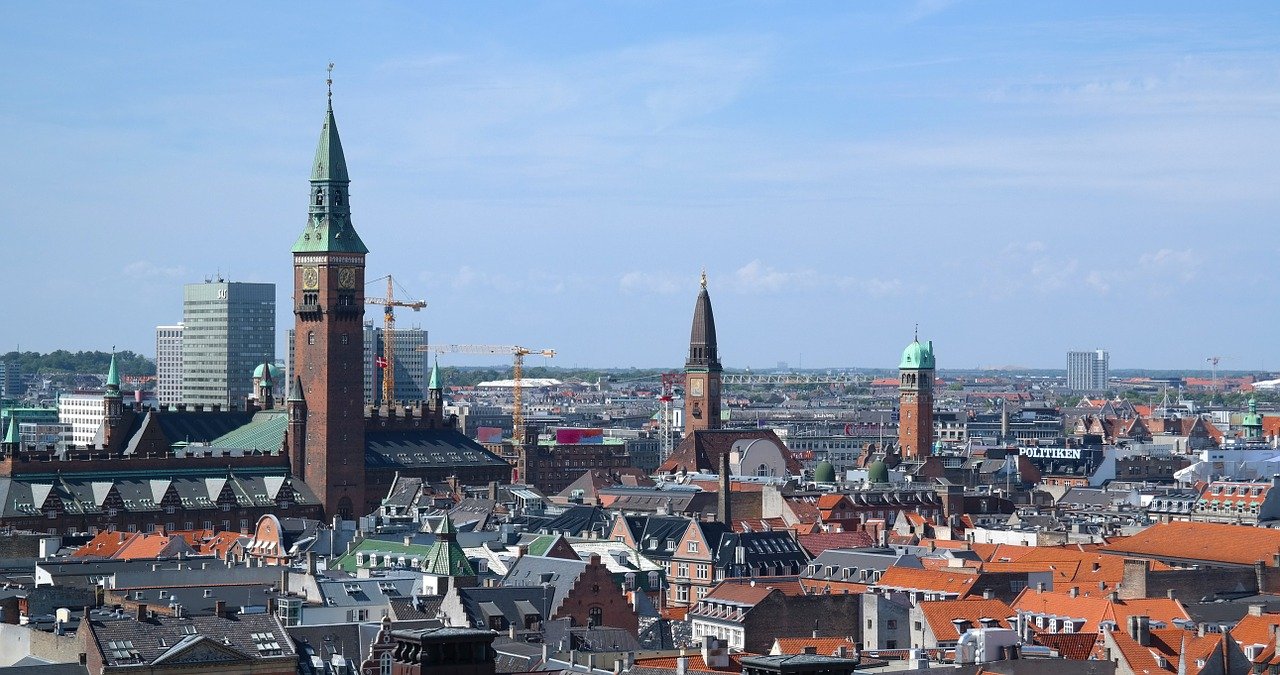
It’s possible that the thought of studying abroad in Denmark is an exciting experience. The idea of traveling by bike through Copenhagen or finding a quiet place to read in a library in Aarhus may be alluring. But for many students who travel internationally to pursue higher education, one of the challenges they encounter after landing at Kastrup Airport (the airport where most international travelers arrive), is the issue of securing health insurance. Denmark has a very good healthcare system, however, the system does not immediately cover everyone who comes into this country. For the international student, the problem of obtaining insurance is not so much about getting covered, as it is about timing. Most international students have to find a way to get themselves insured from the time they land until they can obtain their CPR number (their Danish ID) and begin using the free state-provided healthcare system.
The Danish Healthcare Paradox: Public Wealth, Private Gaps
Denmark has an excellent reputation when it comes to Universal Healthcare. After registering with The Danish Civil Registration System (CPR) you will be given what they call a ‘yellow health card.’ This yellow health card gives you access to GP services at no cost, as well as hospital treatment and emergency services. At first glance this seems very simple, however, the time frame of receiving that card can put you into a potentially vulnerable situation.
The main obstacle many International Students face is the Arrival Gap. For most, you cannot begin the process of applying for a CPR number (the document required for enrollment in the national health system) unless you have secured a fixed address within Denmark. Once applied for, CPR numbers can take anywhere from 2-6 weeks and sometimes longer during the peak months of fall semester to arrive via postal service. Therefore, there exists a grey area. You are left unprotected by the public system if you slip and injure yourself or contract a serious illness such as flu during the time prior to finalizing your registration with CPR.
As a result, many find private international student insurance to become an essential tool rather than a luxury.
What to Check Before You Sign: The Three Pillars of Eligibility
Before comparing specific providers, you must assess your situation based on three specific variables.
1. The Length of Your Stay
Your study programme may be less than three months long so typically, your study abroad experience falls outside of the required CPR registration. As such you can consider yourself as a long-stay tourist. It is therefore highly advisable to get good quality comprehensive private international students insurance for the whole period that you plan to spend in Denmark. A visit to an emergency room in one of our hospitals might end up costing you thousands of euro if you do not have health insurance.
2. Your Nationality and the EHIC Factor
Your passport dictates your starting point.
- EU/EEA and Swiss Students:You’re better off than many other travelers. When you have a valid European Health Insurance Card (EHIC), it gives you access to free or low-cost public health care while traveling in Denmark at the same cost as residents of Denmark. Keep in mind that an EHIC isn’t travel insurance, EHIC doesn’t cover treatment from private hospitals, EHIC may not cover the costs associated with dental treatments and will never help you fly medically back to your own country.
- Non-EU/EEA students : you are at highest risk during this arrival stage, usually you will need to show proof of private health insurance in order to be granted your residence permit. Many students continue with their Yellow Card for a few months before they cancel it and switch back to their (slimmed down) private policies which will provide coverage for things the Danish public system won’t.
3. The Family Multiplier
Are you bringing a family member to Denmark with you? If so, it will be completely different when it comes to budgeting. The public health system is great in Denmark if you have a family once they are registered. However, the likelihood of being affected during the “arrival gap,” and therefore requiring an additional private insurance policy, increases with each dependent. Make sure your new private policy is a “family” plan which includes all members as dependents. There may also be a waiting period before the private insurance covers your family’s medical needs. For example, some policies do not pay for treatment related to your child’s asthma before the waiting period has expired (e.g. 90 days), nor does it usually pay for your spouse’s regular doctor visits for at least 90 days after receiving their own policy.
Coverage Features: Comparing Apples to Oranges
When you look at a policy’s “Table of Benefits,” the numbers can look impressive. But for life in Denmark, four specific areas deserve your closest scrutiny.
Emergency Care and Hospitalization
This is the baseline. Ensure the policy covers 100% of “usual and customary” charges for inpatient care. In Denmark, the public hospitals are state-of-the-art, but if you are using private insurance before your CPR arrives, you need to know if the insurer will pay the hospital directly or if you have to pay out-of-pocket and wait months for a refund.
The “Hidden” Necessity: Repatriation
The greatest single advantage of purchasing an international private health care plan is that it provides financial assistance when you need it most. Even though both the public Danish Health System and the European Health Insurance Card (EHIC) will provide treatment to you in Denmark, neither will cover the cost of flying you back to your own country for extended rehabilitation or to be with your loved ones. Medical evacuations for accidents that are serious enough to require them can exceed $50,000. It is essential that your international health insurance policy includes Medical Evacuation/Repatriation coverage at a level of at least $100,000.
Dental, Optical, and Prescriptions
In Denmark, the Yellow Card is not a “free pass”, as adults over 18 are required to cover a large percentage of their dental bills. The cost of prescription medicine is partially subsidized, however it is not completely free, with individuals responsible for covering all expenses until they reach a yearly threshold. For those who may have an existing problem with their teeth or take very expensive medications on a daily basis, having a private insurance plan that offers additional coverage will provide financial relief.
Personal Liability and Travel Extras
As an international student, you are a traveler. If you accidentally flood your rented apartment by leaving a tap running, or if you collide with someone while cycling, you could be held liable for damages. Many student-specific insurance policies include “Personal Liability” coverage. This is often overlooked but can be a life-saver in a litigious situation.
Single vs. Family: Strategic Differences
The needs of a 20-year-old undergraduate and a 35-year-old PhD candidate with two toddlers are worlds apart.
| Feature | Single Student Strategy | Family Student Strategy |
| Premium Structure | Focus on low-cost, high-deductible plans that cover “catastrophes” and the arrival gap. | Expect higher premiums. Look for “per family” deductibles rather than “per person” to cap your costs. |
| Medical Priority | Accidental injury and repatriation are the core focus. | Pediatric care, maternity (if applicable), and spouse coverage clarity. |
| Key Detail | Ensure the policy is “Visa Compliant” to satisfy Danish Immigration (SIRI). | Confirm that there is no “waiting period” for children’s acute illnesses. |
Quality Signals: How to Spot a Trustworthy Provider
Don’t just choose the first insurer recommended by a Facebook group. Look for these professional signals:
- Visa Acceptance: Does the provider explicitly state their insurance is accepted for Danish residence permit applications? Some insurers, like Swisscare, Aon, or Care Concept, have specific “Denmark” packages tailored to these requirements.
- Instant Documentation: You often need proof of insurance now to finish an application. A trustworthy provider offers instant digital certificates.
- English Support: When you are sick and stressed, the last thing you want is a language barrier. Test their customer service. Do they have a 24/7 English-speaking claims line?
- Clear Exclusions: A “too good to be true” price usually hides nasty exclusions. Check the policy for “Pre-existing conditions.” Most student plans won’t cover a condition you had before you arrived unless you buy a premium tier.
The Practical Choice Rule
For most international students in Denmark, the best and cheapest way is a two-part hybrid method.
Step 1: Arrival Shield. First, purchase a foreign student insurance policy as soon as you depart from your home country. As long as it will last through at least the first three months of your time abroad. The policy should protect you from day one through your trip, the early days in your new place of residence and until you receive your CPR number (the Danish government ID) and have received your yellow card which provides basic health coverage for the rest of your time here.
Step 2: The Public Transition. After receiving your yellow card, you will be protected by the public health system for the basics. Then you may either allow your private policy to lapse, if you do so, you may then choose a less expensive option with private dental/specialist coverage and/or repatriation only.
If you are an EU student, your shield does not need to be very large since the EHIC (Healthcare Insurance Card) will take care of your medical requirements. If you are a non-EU student, your shield will need to provide the immigration authorities with sufficient protection.
Pro Tips:
Navigating a foreign country’s healthcare system is another part of the ‘hidden curriculum’ of studying abroad. Securing private insurance for the gap between arriving in your destination country and when you will first qualify for a national health plan (i.e., once you have registered with the local authorities) as well as knowing what the limitations are of the public system can help you avoid turning a small health issue into a potential financial catastrophe. While living in Denmark provides for an incredibly high quality of life, however, it also expects its residents to be extremely organized. Be that student that has their insurance taken care of before they even land at your destination airport. Your future self and your family will appreciate the effort.
References:
- Allianz Care. (n.d.). International student health insurance. https://www.allianzcare.com/en/personal-international-health-insurance/who-we-help/students.html
- Aarhus University. (n.d.). Insurance. https://international.au.dk/life/studentscomingtoau/prepareyourarrival/insurance
- Copenhagen Expats. (2025, May 14). How to get your CPR number in Denmark. https://copenhagenexpats.com/expat-essentials/cpr-number/
- IDA Student Insurance. (2025, October 29). IDA student insurance – Cheapest in Denmark. https://studerende.ida.dk/english/benefits-for-students/ida-student-insurance/
- International Student Insurance. (2024, November 3). Denmark international student insurance. https://www.internationalstudentinsurance.com/denmark-student-insurance.php
- International Student Insurance. (2025, October 16). Healthcare in Denmark. https://www.internationalstudentinsurance.com/denmark-student-insurance/healthcare-in-denmark.php
- Life in Denmark. (2025, September 24). Healthcare when working in Denmark. https://lifeindenmark.borger.dk/healthcare/health-insurance/healthcare-when-working-in-denmark
- Study in Denmark. (n.d.). Health & safety. https://www.studyindenmark.com/healthsafety.aspx
- Student Insurance. (2026, March 25). Student health insurance in Denmark: The full picture. https://www.student-insurance.com/blog/student-health-insurance-denmark-yellow-card-guide/
- Student Insurance. (n.d.). Student health insurance Denmark. https://www.student-insurance.com/countries/denmark/
- Swisscare. (n.d.). International student health insurance Denmark. https://swisscare.com/en/country/denmark
- University of Copenhagen. (n.d.). Health and safety in Denmark. https://www.ku.dk/studies/student-life/living-in-copenhagen/health-and-safety-in-denmark
- VIA University College. (n.d.). Which insurances will you need in Denmark? https://en.via.dk/life-in-denmark/insurance-in-denmark