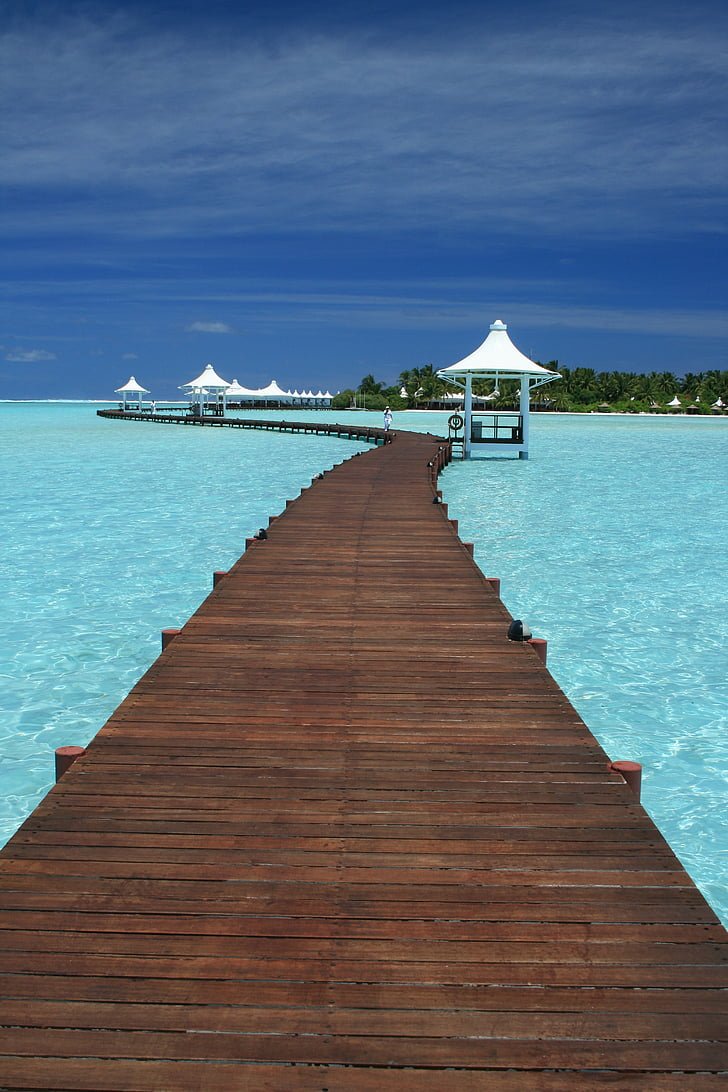
A person considering relocation for their education in one of the world’s few archipelagos will find a variety of challenges associated with logistics. While most people think about the beautiful coral atolls and crystal blue waters of the Maldives, they rarely consider the complexities of the healthcare system. In order to study in the Maldives, a student (or a family) must purchase health insurance. Health insurance for students wishing to relocate to the Maldives is mandated under law. The Maldivian government requires all foreign nationals to have health insurance before they enter the country, and this is required when submitting a visa application.
Compliance is merely half the equation. Once you obtain a statutory policy which allows you to enter the Maldives, the insurance will likely protect you against financial ruin should you become ill on one of the many outlying islands where access to hospitals is limited. Access to tertiary level care on these islands is very limited. For example, there are no tertiary hospitals available on some of the outlying islands. Therefore, should a serious illness occur on an outer island, patients would be medically airlifted to either India or Sri Lanka. As such, whether you are single and an independent post-grad research candidate or relocating with your spouse and children, you require a well-planned plan. This document reviews the legal requirements for obtaining coverage, assesses the limitations of local resources, and provides guidance for establishing a network of protection for your status as a resident of the Maldives and also protecting your financial interests.
1. Visa Compliance: The Non-Negotiable Baseline
Maldives Immigration does not accept generic foreign travel insurance policies for student visa applications or annual renewals. The regulatory framework requires an expatriate health insurance policy issued specifically by a licensed Maldivian insurer, submitted alongside an approved medical screening report.
| Visa Prerequisite | Regulatory Authority | Practical Mandate |
| Approved Medical Screening | Ministry of Health (MOH) | Official medical examination conducted at an authorized local clinical facility. |
| Local Expatriate Policy | Licensed Maldivian Insurer | Mandatory insurance policy satisfying statutory visa criteria for entry and residency. |
| Institutional Sponsorship | Accredited University / College | Formal enrollment confirmation from institutions such as MNU, IUM, or Villa College. |
Institutional Pathways and Approved Carriers
Students who are foreign nationals at the universities in the Maldives have to obtain health insurance as part of their admission process. At least two major universities — the Islamic University of the Maldives and Villa College — work directly with local health insurance companies.
The Maldives National University, for example, advises its international students to purchase the minimum required amount of mandatory coverage from Allied Insurance Company of the Maldives — which is one of the largest private health insurance providers in the Maldives — at an estimated cost of approximately $52 per year. This mandatory health insurance covers a student for their regulatory requirements for entry into the Maldives. It also provides a level of protection against becoming a public charge by ensuring you will be able to pay for inpatient care if necessary. But there can be confusion for some students when they realize that the mandatory immigration product does not provide them with comprehensive medical insurance. In fact it is really just a minimal or “catastrophic” inpatient plan intended only to meet the legal requirements to enter the country.
Dependents and Family Visas
If your spouse or children accompany you, the regulatory burden multiplies:
- Every dependent requires an individual visa clearance.
- Each dependent must undergo the local Ministry-of-Health-approved medical screening.
- Each dependent must hold a compliant local expatriate policy.
- Immigration makes no allowances for pooled or unverified third-party coverage during the entry application.
Never assume a single policy extends automatically to family members. Proof of insurance must be attached to each passport file submitted to the immigration portal.
2. Geography Dictates Risk: Understanding the Maldivian Medical Grid
To understand why a basic local policy might fall short, you must understand the local healthcare geography. The Maldives comprises nearly 1,200 islands organized into 26 natural atolls. Tertiary medical infrastructure is heavily concentrated within the Greater Malé urban cluster, which includes Malé, Hulhumalé, and Villimalé.
| Facility Tier | Representative Providers | Clinical Scope and Capabilities |
| Central Tertiary (Malé) | Indira Gandhi Memorial Hospital (IGMH), ADK Hospital | Primary public referral hospital and large private hospital; major trauma, surgical specialties, acute triage. |
| Private Tertiary (Hulhumalé) | Tree Top Hospital | Modern diagnostics, advanced intensive care units, international specialist clinics, private surgical suites. |
| Regional / Atoll Facilities | Atoll Hospitals, Island Health Centers | Basic patient stabilization, general practitioner care, minor wound dressing, initial community triage. |
The Capital Cluster
Those who are studying in Malé or Hulhumalé have direct access to the country’s top hospitals. ADK Hospital is a full-service hospital for general surgery and emergency services. The primary national hospital of the Government of the Maldives is the IGMH which provides all levels of acute care. Tree Top Hospital at Hulhumalé has state-of-the-art clinical equipment with many specialized outpatient clinics and intensive-care units.
The Outer Atolls
The calculation changes drastically if your academic program involves field research, marine conservation, or travel across outer atolls. Island health centers and atoll hospitals manage basic triage, minor illnesses, and straightforward births. They cannot manage complex trauma, acute neurosurgical events, or severe decompression sickness without transfers.
Cross-Border Air Ambulances
When local specialists encounter conditions beyond domestic clinical capacity, patients are transferred overseas. The standard regional evacuation routes run directly to medical centers in Kochi, Trivandrum, or Chennai in Southern India, as well as Colombo in Sri Lanka.
Chartering an air ambulance with critical care paramedics across international boundaries can cost between USD 20,000 and USD 45,000. If your policy lacks comprehensive cross-border medical evacuation, you or your family will be required to guarantee those funds out of pocket before an aircraft is dispatched.
3. Essential Coverage Elements: A Component Analysis
Evaluating policy documentation requires assessing how specific clauses function within the Maldivian operating environment. Review the following core categories before selecting your plan.
| Benefit Category | Scope to Verify | Maldivian Operating Reality |
| Inpatient Hospitalization | Room board, operating theater fees, surgeon charges, ICU daily limits, and specialist visits. | Daily limits must reflect private room and ICU rates at major hospitals like ADK and Tree Top Hospital. |
| Emergency Evacuation | Domestic transport from outer atolls via speedboat or seaplane; international air ambulance to India or Sri Lanka. | Domestic sea transfers easily reach hundreds of dollars; international air ambulances cost tens of thousands. Evacuation cover must be explicit. |
| Outpatient Care (OPD) | Primary care physician consultations, specialist referrals, diagnostic imaging, laboratory tests, and prescription pharmaceuticals. | Most student-visa expatriate plans minimize or completely exclude outpatient costs, leaving routine visits as recurring cash outlays. |
| Repatriation of Remains | Logistical arrangements, bureaucratic clearance, embalming, and international air transport to the home country. | Repatriation procedures across maritime territories involve administrative hurdles and substantial logistical costs. |
| Water and Adventure Sports | Diving injuries, hyperbaric chamber treatments, open-ocean swimming, and board sports. | Many insurers classify diving or surfing as high-risk, excluding hyperbaric treatments unless you secure an optional sports rider. |
| Infectious Diseases | Admission, diagnostic panels, isolation costs, and supportive therapies for dengue, respiratory viruses, and foodborne conditions. | Vector-borne diseases like dengue occur seasonally; treatment requires diagnostic blood monitoring and supportive hospital care. |
| Mental Health Support | Outpatient psychiatric care, licensed psychotherapy, and acute psychiatric emergency stabilization. | In-country mental health services are limited; international student policies should ideally cover remote tele-health counseling sessions. |
| Dental and Optical Care | Emergency relief of sudden pain, accidental dental injury repair, routine check-ups, and prescription lenses. | Routine dentistry is routinely excluded from entry-level products. Emergency dental stabilization should be verified. |
4. Single Student Strategic Blueprint
If you are coming to the Maldives alone, your main goal is balancing your monthly budget with strong emergency protections. A single catastrophic event should not derail your education or exhaust your savings.
| Coverage Layer | Recommended Provider / Strategy | Financial and Practical Objective |
| Mandatory Visa Baseline | Allied Insurance or licensed local underwriter | Satisfies Maldives Immigration student visa statutory criteria directly. |
| Routine Primary Care | Self-funded out of pocket (MVR 300 to MVR 1,000) | Eliminates high premium surcharges for routine GP appointments and minor medications. |
| Catastrophic & Evacuation | International emergency travel or expatriate top-up rider | Safeguards against air ambulance costs, major operations, and regional ICU admissions. |
Managing Everyday Outpatient Expenses
The normal MVR 800 local student plan seldom provides for doctors’ visits that are routine. In most cases you’ll have to be able to pay in cash for routine doctor’s appointments and prescriptions.
There is good news when it comes to Malé primary outpatient services; compared to western prices these services remain relatively inexpensive. Most consultations at a clinic/hospital, private or public, cost anywhere from MVR 200.00-MVR 800.00 (US $ 13.00-US$ 52.00) per visit. Blood tests as well as basic prescription medication can also be found at reasonable price levels.
In fact, an intelligent budgeting strategy for a number of single students may involve using their insurance funds to protect against high-risk events such as admission to intensive care units, surgery and expensive emergency airlifts and saving money to take care of themselves when they need routine medical treatment.
Deductibles and Network Exclusions
Take time to review the policy deductibles and copayment terms:
- Does the plan apply a flat excess per hospital claim?
- Does it require a percentage coinsurance (for example, you pay 20% while the insurer covers 80%)?
- Does the policy have an annual aggregate limit that resets every calendar year?
A policy with a low MVR 20,000 annual maximum benefit can be exhausted within three days inside an intensive care ward. Choose policies with high annual benefit caps. Even if this raises your upfront premium, it shields you from serious financial liability.
Maritime Exclusions and Diving Cover
Do not assume standard policies protect you while you enjoy the Maldivian waters. Most baseline expatriate packages explicitly exclude injuries sustained during hazardous sports.
If you plan to surf along the atoll breaks or dive below ten meters, check the fine print:
- Are scuba activities covered up to your certification depth (e.g., PADI Open Water 18 meters)?
- Does the policy cover the cost of hyperbaric chamber therapy?
- Decompression chambers operate at select locations, such as Bandos Maldives and specific resort outposts. Treatments run into thousands of dollars.
- If excluded, purchase an annual recreational diving membership through an organization like the Divers Alert Network (DAN) to bridge the gap.
5. Family Student Strategic Blueprint
Relocating with a spouse or dependent children changes your insurance needs completely. While a single student can comfortably manage occasional outpatient bills, healthcare expenses for young families add up quickly.
| Family Health Priority | Core Protection Area | Operational Focus |
| Individual Visa Compliance | Every accompanying family member | Independent medical clearance reports and dedicated local insurance policies. |
| Pediatric Healthcare | Dependent children | Pediatrician visits, acute fever treatments, and childhood immunization schedules. |
| Maternity & Newborn Care | Expectant parents | Review of strict 10 to 12 month waiting periods and neonatal intensive care coverage. |
| Regional Evacuation Cover | Entire family unit | Comprehensive evacuation authorization guaranteeing cross-border care for dependents. |
Pediatric Coverage and Immunizations
Children are very susceptible to illness, therefore it is important that you take advantage of pediatric doctor visits, and emergency room visits when a child has a high fever. Make sure your family policy or supplemental health insurance includes these services as well as all required early childhood vaccinations. Vaccinations available at public vaccination clinics in the Maldives follow the same schedule as those from the World Health Organization. However, many international families choose to have their children receive all vaccinations by visiting the outpatient department of a private hospital. Determine if routine childhood vaccinations are covered by your medical insurance provider (as part of preventive care) or will be considered a separate outpatient visit..
Maternity, Prenatal Care, and Delivery
If you or your spouse might become pregnant during your studies, examine the policy’s maternity terms immediately.
Almost all comprehensive health insurance policies enforce a strict waiting period on maternity benefits. These periods typically span 10 to 12 months from policy inception before any claim for prenatal scans, routine blood panels, or delivery costs will be honored.
| Policy Timeline | Eligibility Status | Claim Entitlement |
| Day 1 (Policy Inception) | Waiting period commences | No maternity-related claims eligible for reimbursement or direct billing. |
| Months 1 to 10 | Continuous waiting window | All pregnancy, prenatal screening, and delivery expenses remain self-funded. |
| Month 10 and Beyond | Benefit activation | Full maternity benefits unlock: prenatal care, delivery, and post-natal reviews. |
If you purchase your health insurance policy after you have conceived, all pregnancy related medical treatment will be defined as a “pre-existing” condition and therefore eliminated from coverage.
Check the delivery limit for local hospitals. The cost to deliver an uncomplicated baby via cesarian with no complications at one of these private hospitals is vastly different than delivering a baby by emergency c-section when it requires a newborn incubator stay in the Neonatal Intensive Care Unit (NICU) for the first few days. Therefore, your policy should include specific neonatal protections which protect the newborn from the moment of birth.
Comparing Family Plans Against Individual Policies
| Consideration Dimension | Consolidated Family Policy | Stacked Individual Policies |
| Policy Administration | Single annual renewal date and joint documentation | Multiple renewal dates and independent policy files |
| Annual Benefit Ceiling | Shared or pooled limit across all insured individuals | Independent, dedicated benefit limits for each person |
| Coverage Tailoring | Uniform terms applied universally across members | Tailored add-ons (maternity, sports) only for members who need them |
| Total Cost Impact | Convenient, but higher collective baseline premium | Highly cost-efficient through strategic tier allocation |
A Family Plan (pooled) offers a single Policy Document and a Shared Renewal Date which is very simple. However, evaluate whether shared Benefit Limits expose you.
If one family member has an extended Hospital Stay, it may be exhausted by that year as well.
Individual Policies generally offer much Higher Individual Limit per person than a Family Plan does. Also, when purchasing Individual Policies, you can Add Specific Riders such as Sports/Maternity Cover to only those family members who have a legitimate use for them.
6. Provider Networks, Direct Billing, and Claims Administration
An insurance policy is ultimately a financial contract. Its real value comes down to how smoothly it functions during a medical crisis. When a doctor orders emergency tests, you need immediate clarity on how those bills get paid.
Direct Billing vs. Pay and Claim
Healthcare providers in the Maldives handle payments in two ways: cashless direct billing or pay-and-claim.
| Settlement Model | Procedural Workflow | Financial Impact on Student |
| Direct Settlement (Cashless) | Hospital requests a Guarantee of Payment (GOP) from the insurer; underwriter settles invoice directly. | Zero out-of-pocket payment required aside from policy copayments or deductibles. |
| Pay-and-Claim (Reimbursement) | Patient settles hospital invoices directly out of pocket; submits receipts and charts later. | Requires immediate access to liquid funds or credit cards; reimbursement takes weeks. |
Local insurers such as Allied have direct settlement agreements with all of the major Maldivian domestic providers (e.g., ADK, Tree Top Hospital & IGMH) for covered in-patient treatment. You will provide your national expat health insurance card. The hospital will contact the underwriters to obtain a “Guarantee of Payment” (GOP).
When dealing with international insurers you should confirm that the assistance team employed by the insurer has an active direct-settlement agreement with Maldivian Hospitals. In cases where there is no direct billing arrangement, it is likely you would need to advance payment for the hospital bill, often on a high limit credit card. After receiving care you may submit your receipts (translated into English), medical records and discharge summaries to be reimbursed for the payments you made for hospital services..
24/7 Operations and Language Support
Emergency situations seldom happen on regular business days. Insurance companies that have restrictions in their daily operating schedule will hold off approval of claims when you are going to be needing it the most.
Your healthcare provider needs to have a separate 24-hour emergency hotline for all urgent issues. The prompt communication of treatment physicians, hospital management and the insurance company’s medical staff are critical as you arrange for a speedboat to leave an atoll or plan an airlift to Colombo.
Pre-Existing Conditions and Continuous Portability
Standard local student policies routinely exclude pre-existing chronic conditions like asthma, diabetes, or auto-immune disorders.
If you require ongoing maintenance medications or regular specialist check-ins, disclose your full medical history during application. While this may lead to specific underwriting exclusions or an adjusted premium, it guarantees the policy remains legally valid. Hiding a medical condition can lead to an insurer voiding your policy entirely when an emergency strikes.
7. The Two-Tier Strategy: How to Build an Airtight Safety Net
Savvy international students rarely rely on a single insurance product. Instead, they use a practical two-tier system to stay fully protected without overspending.
| Strategic Tier | Policy Classification | Core Operational Coverage |
| Tier 1: Visa Foundation | Local Maldivian Expatriate Policy (e.g., Allied MVR 800) | Fulfills Maldives Immigration visa requirements; covers domestic emergency admissions and basic capital triage. |
| Tier 2: Regional Umbrella | International Expatriate / Travel Medical Policy | Covers medical evacuations to India/Sri Lanka, regional hospital surgeries, repatriation, and adventure sports. |
Tier 1: The Visa Base
Purchase the local, immigration-compliant expatriate insurance policy arranged via your academic institution or purchased directly from a Maldivian underwriter. This provides your visa approval, keeps you in good standing with the Ministry of Health, and handles baseline inpatient emergencies in the capital.
Tier 2: The Supplemental Protector
Layer an international expatriate or high-deductible travel health policy over the local base.
This second policy does not need to cover minor, inexpensive clinic appointments. Instead, configure it with a high deductible (for example, USD 1,000 to USD 2,500) to keep the annual premium affordable.
Its job is to protect against life-altering financial risks:
- Air ambulance evacuation from remote atolls directly to specialized medical centers abroad.
- Extensive surgical and inpatient care across India, Sri Lanka, or Southeast Asia.
- Comprehensive emergency repatriation to your home country.
- Worldwide travel protection during semester breaks and academic field trips.
This two-tier approach gives you full legal compliance for your student visa along with the deep emergency protections used by corporate expatriates.
8. Actionable Due Diligence Checklist
Before paying an insurance premium or signing an enrollment form, review this checklist. Make sure you have clear, written answers to every question.
- Immigration Validation: Is the underwriter explicitly recognized by Maldives Immigration and your university for student-visa clearance?
- Validity Period: Does coverage run uninterrupted across the full duration of your academic enrollment, including end-of-semester breaks?
- Family Inclusion: Is every dependent covered on their own compliant policy document, matching their individual dependent visa application?
- Evacuation Dispatch: What is the maximum limit for domestic transfers via boat/seaplane, and does coverage include air ambulances to India or Sri Lanka?
- Direct Billing: Does the insurer have active direct-billing arrangements with Tree Top Hospital, ADK Hospital, and IGMH?
- Water Sports Coverage: Does the policy explicitly include leisure swimming, surfing, and scuba diving, or will you need a separate sports rider?
- Maternity Timing: If starting a family is possible, what is the exact waiting period, and does the policy provide automatic coverage for newborns?
- Claims Settlement: Can you file claims online, and what is the typical turnaround time for international currency reimbursements?
Protecting Your Academic Journey
Studying overseas can be one of the most exhilarating experiences of your life; however, there are many unknowns that come along with it. There may be challenges and obstacles while balancing school work such as reading assignments, attending classes, etc., but also living on an island, where resources for emergencies (medical or otherwise) may be limited.
Insurance is much more than simply checking off a requirement from your immigration checklist. Find a reputable domestic underwriter who meets the requirements of your local visa regulations. Then find out what limitations exist in the medical facilities available locally. Finally determine if there are any areas of coverage for which you do not have adequate protection and purchase emergency evacuation coverage to fill these gaps.
Investing in a comprehensive international health insurance policy today will allow you to better prepare yourself for the opportunities that lie ahead.
References
- Maldives Immigration. (2022, May 23). Regarding expatriate health insurance policy and medical report submission.
- https://www2.immigration.gov.mv/regarding-expatriate-health-insurance-policy-and-medical-report-submission/
- Maldives Immigration. (2026, September 6). Dependent visa service.
- https://www.immigration.gov.mv/visa/dependent
- Maldives National University. (2025, February 6). International students.
- https://mnu.edu.mv/international-students/
- Ministry of Foreign Affairs, Republic of Maldives. (n.d.). Insurance.
- https://my.mdvmission.gov.mv/index.php/en/consular/tips-for-travellers/insurance
- Australian Government Department of Foreign Affairs and Trade. (2026, October 3). Maldives travel advice and safety. Smartraveller.
- https://www.smartraveller.gov.au/destinations/asia/maldives
- APRIL International. (2026, March 26). How to choose the right international health insurance.
- https://www.april-international.com/en/long-term-international-health-insurance/guide/how-to-choose-the-right-international-health-insurance
- Expatica. (2026, June 9). International health insurance: Complete guide for expats living abroad in 2026.
- https://www.expatica.com/global/healthcare/healthcare-basics/international-health-insurance-guide-2173442/
- Feather Insurance. (2026, June 3). International health insurance: Definitive guide (2026).
- https://feather-insurance.com/en-ww/blog/international-health-insurance-guide
- Insurancy. (2024, November 6). International health insurance for Maldives comparison.
- https://www.insurancy.de/en/international-health-insurance/maldives-comparison/
- NerdWallet. (2022, April 10). How to choose health insurance: Your step-by-step guide.
- https://www.nerdwallet.com/insurance/health/learn/choose-health-insurance
- William Russell. (2024, July 24). Comparing international health insurance.
- https://www.william-russell.com/international-health-insurance/how-to-compare/
- William Russell. (2023, March 13). International health insurance comparison: How to compare international health insurance plans.
- https://www.william-russell.com/blog/how-to-compare-international-health-insurance-plans/