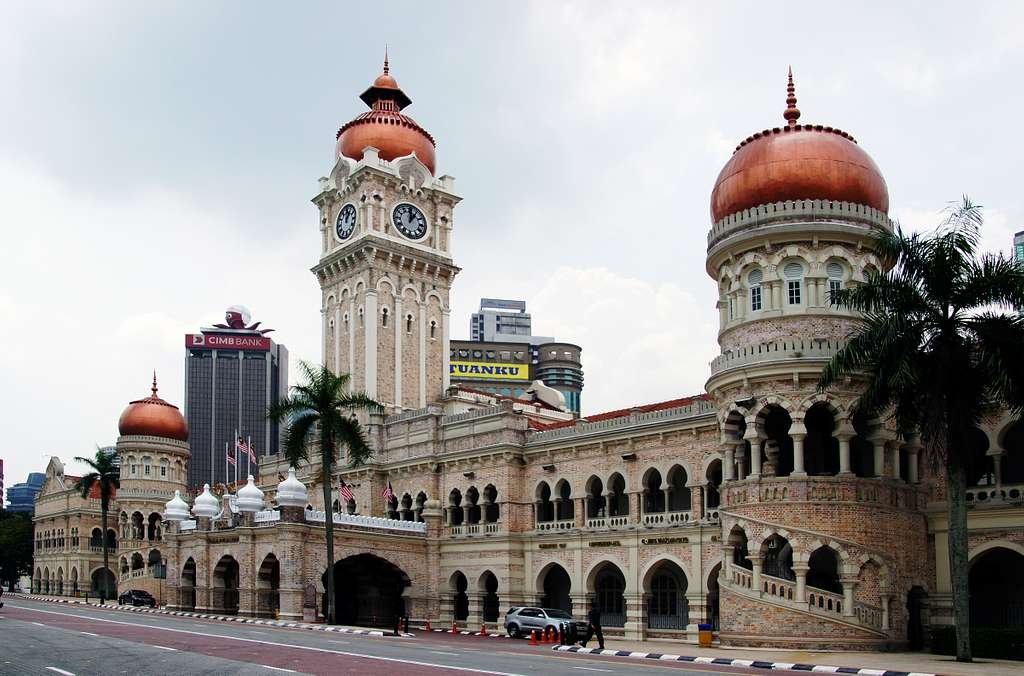
Moving to Malaysia for educational purposes means having access to quality higher education programs, as well as a relatively affordable standard of living and excellent health care systems. However, there is often confusion when evaluating the many options available for medical coverage.
Insurance serves two purposes. It satisfies the administrative requirements that allow you to obtain a valid student visa, however, it also protects you from being financially devastated by large medical bills if you require private medical treatment.
While most students meet the first requirement (i.e., obtaining an insurance policy which complies with the requirements of their student visa), few students consider the fact that the low-cost insurance plan they purchased will not provide them with adequate protection. For example, if a student suffers an unexpected appendectomy, is admitted into the hospital for dengue fever, or needs to take his/her child to the doctor on short notice, he/she may soon discover that their insurance has insufficient limits on how much money will be reimbursed per year, high copays, and restrictive networks.
The reality is that medical emergencies do not wait until you have time to resolve the situation. Private hospitals in Malaysia offer state-of-the-art facilities and care; however, they typically require that patients pay their bill before receiving services.
1. The Regulatory Baseline and Visa Requirements
Malaysia does not allow international students to self-insure or opt out of medical protection. The legal framework surrounding student mobility requires active, locally compliant insurance from day one.
Compulsory Local Coverage
The Ministry of Higher Education (MOHE) requires that all foreign students maintain a legitimate medical insurance program purchased from Malaysia-based providers. A standard travel policy bought in your home country will NOT be accepted for clearing entry/exit formalities. To meet MOHE requirements the insurance policy must be underwritten locally; provide at least the level of coverage required by the Government of Malaysia; and connect directly into the domestic healthcare provider’s billing systems.
The EMGS System and Institutional Packages
There are education centers in many areas of Peninsular Malaysia where Education Malaysia Global Services (EMGS) can process Student Pass Applications. In order to speed up approval processing, EMGS has entered into partnerships with local insurance companies such as Etiqa, Great Eastern and AIA to offer their students a Standard Student Medical Packages.
Your University or College usually will be the agent through which you purchase the coverage. They will include the premium in your initial Administrative Invoice and issue the Certificate needed by Immigration to complete your eVAL.
Although, purchasing the default EMGS-approved plan may be the easiest way to get your administrative requirements completed; it does not mean that it covers all of your potential vulnerabilities. The plans are designed to meet a legal requirement and to cover your basic medical needs but they are not designed to be a full medical program.
The Requirement of Continuous Cover
Your Health Insurance Policy and your Student Pass are linked by law.
The maximum term that an International Student may hold a Student Pass is 12 months. Therefore if you have been accepted into a program for 3 years; there can be no gaps in your health insurance. For example, if your policy lapses (for whatever reason) prior to the processing of your Student Pass Renewal File; Immigration will reject your Renewal Application.
You can only obtain health insurance coverage in 12 month blocks. Should you change from one study program to another; delay a semester of studies or transfer to a different institution; you must contact your International Student Office so they can assist you in maintaining continuous coverage.
Dependant Regulations
If you’re planning to pursue a Post-Graduate Degree (Typically: Master’s or PhD), Malaysian Immigration allows you to bring Dependents with you. A “Dependent” is defined as your Legal Spouse, your Dependent Children and, under certain conditions, your Parents.
However, The Primary Student Package that is purchased through the EMGS does NOT provide coverage for Family Members. Your Dependents will be residing in Malaysia on their own Dependant Passes; each pass has its own documentation.
Therefore, Each Dependent is required to obtain Individual Health Insurance Policies, which meet the requirements of Malaysian Immigration. This means you’ll need to individually find, pay for and administer these policies OR you can attempt to negotiate having them included through your University’s International Office. Managing a family adds an immediate multiplier effect to both your Administrative Responsibilities AND Financial Obligations.
2. Coverage Scope: What to Compare
Looking strictly at premium figures will lead to poor insurance decisions. Two policies with identical annual prices often feature completely different policy schedules. To evaluate real protection, dissect the policy schedule across four core categories.
Inpatient Care and Hospitalisation Limits
Inpatient care represents your greatest financial exposure. If you are admitted to a hospital ward, the costs climb rapidly.
- Overall Annual Limit: This is the maximum sum the insurer will pay within a single policy year. Standard student plans often cap this between RM 20,000 and RM 50,000. While RM 30,000 covers uncomplicated dengue fever or a broken bone, it will fall short if you require emergency neurosurgery or extended intensive care. For individuals, an annual limit of at least RM 50,000 to RM 100,000 offers a safer cushion. For families, look for higher tiers.
- Lifetime Limits: Some budget plans impose a lifetime cap across your entire study duration. Avoid restrictive lifetime limits whenever possible. An annual limit that refreshes every 12 months is far safer.
- Room and Board Daily Allowance: Policies cap the daily rate for your hospital bed (for example, RM 150 to RM 250 per day). If you choose a private single room costing RM 350 per day at a major private medical centre, you pay the difference out of pocket. Worse, many insurers apply a co-insurance penalty to your entire hospital bill if you select a room tier above your policy limit.
- ICU and Surgical Schedules: Ensure the plan covers Intensive Care Unit (ICU) charges and operating theatre fees based on “reasonable and customary” charges rather than narrow, fixed sub-limits. A strict surgical sub-limit can leave you paying thousands of ringgit if your surgery exceeds an arbitrary schedule.
Outpatient and Routine Consultations
Outpatient care covers visits where you are treated and sent home the same day.
- General Practitioner (GP) Care: Most baseline student policies exclude routine clinic visits for minor ailments like colds, flu, or simple stomach bugs. You pay cash at the local clinic. These visits in Malaysia are relatively inexpensive (usually RM 50 to RM 120 including basic medications), making this exclusion manageable for single, healthy students.
- Specialist Consultations: If you need to see a dermatologist, orthopaedic surgeon, or cardiologist outside of an inpatient stay, fees increase significantly. Review whether the policy covers outpatient specialist visits and whether it requires a prior referral letter from a general practitioner.
- Diagnostic Imaging and Pathology: Advanced diagnostics such as MRI scans, CT scans, and extensive blood work can cost between RM 800 and RM 3,000. Confirm whether these diagnostics are covered when ordered for serious conditions, even without an overnight hospital stay.
Medical Emergencies, Regional Travel, and Evacuation
International students are mobile. You will likely explore Southeast Asia during academic breaks, or you may study on a regional campus in Sabah, Sarawak, or rural peninsula districts.
- Emergency Medical Evacuation: If you experience critical trauma in an area without advanced tertiary medical facilities, emergency transport to a major medical centre is essential. Air ambulance transfer from East Malaysia to Kuala Lumpur can easily exceed RM 60,000. Check that emergency evacuation and repatriation of mortal remains are explicitly included.
- Territorial Limits: The standard EMGS policy applies strictly within Malaysia. The moment you cross the border into Thailand or return home for holiday breaks, coverage stops. If you plan to travel across the ASEAN region, do not rely on local student health insurance. You must buy separate travel medical coverage.
Family-Specific Considerations
Bringing dependants shifts your priorities toward paediatric care, home safety, and preventive health.
| Family Provision | Risk Profile | Why It Matters for Dependants |
| Paediatric Inpatient Limits | High frequency | Young children experience higher admission rates for respiratory illnesses and viral fevers; low sub-limits leave parents with heavy out-of-pocket bills. |
| Outpatient GP Allowances | Routine use | Families need clinic coverage; young children frequently require prescription antibiotics, ear treatments, and nebuliser therapy. |
| Vaccination Exclusions | Universal exclusion | Standard student and local private policies exclude routine childhood immunisations; these must be planned and budgeted out of pocket. |
| Maternity Exclusions | Structural exclusion | Pregnancy, prenatal monitoring, deliveries, and neonatal intensive care are almost universally excluded or carry long waiting periods. |
Maternity care warrants particular caution. If a policy does offer maternity benefits, it will almost always include a waiting period of 10 to 12 months before conception. If you or your spouse might become pregnant during your studies, assume delivery costs will come entirely out of pocket. Normal deliveries in private hospitals run between RM 5,000 and RM 10,000, while emergency Caesarean deliveries can reach RM 15,000 to RM 25,000.
3. Costs, Deductibles, and Hidden Out-of-Pocket Charges
Do not evaluate an insurance policy solely on its sticker price. The annual premium is simply the cost of holding the contract. Your real financial exposure is determined by how the policy handles claims.
Premium Ranges in the Malaysian Market
The cost of a basic EMGS-linked group plan is typically between RM 500 and RM 1200 annually. While these plans provide an affordable option for budget-conscious international students, they also come with lower premiums at the expense of reduced policy benefits and tighter sublimits. Private medical insurance products can be acquired through standalone individual purchase options from major private health insurance companies such as Prudential, AIA, Great Eastern, or Allianz; each may have different premium rates based on your age and/or medical history. Premiums can vary in price from approximately RM 1800 to RM 4500 per year, while providing coverage for unlimited amounts of hospitalization expenses (RM 100,000 to RM 1,000,000 or greater). Additionally, when you see the doctor or stay in the hospital, there are no restrictions on what room rate will be covered. In addition, most of these private health insurance providers offer full direct billing capabilities.
Deductibles and Excess
You have to settle a specific amount (deductible/excess) before your insurer will start paying one dollar or ringgit.
A zero deductible plan offers the most convenience; however, this comes at a cost in that your annual premiums will be substantially higher.
A low deductible plan provides great savings on your yearly premium if you are generally a healthy student who has an adequate emergency fund.
Low deductible plans require that you spend out of pocket up front, but it greatly reduces the amount you are required to pay annually for health insurance.
Co-Insurance and Co-Payment Penalties
Co-insurance is where you have to pay a certain % of your entire eligible medical bill. Most people are limited to 10% to 20% of their total eligible medical expenses. A lot of policies also include a cap on the amount you can be required to pay.
Many people do not know about the hidden ways that some insurance companies use to cause co-insurance. One of the biggest traps is when you pick a hospital room that is above your daily rate of room and board. For example if your policy limits your daily rate of room and board to RM 150.00 but you chose to rent an RM 250.00 per night room. Your insurance company will likely only cover 80% of your medical bills from the time you moved into that higher priced room. That leaves you with the other 20%.
Hospital Sundries and Admin Charges
Private hospitals routinely bill for small consumables: registration fees, sanitisation packs, surgical gloves, nursing supplies, and over-the-counter pain relief. Many insurance plans classify these as non-medical sundries and deduct them from the final settlement. Always expect to pay RM 100 to RM 300 in non-covered items when checking out of a private facility.
4. Provider Networks and Hospital Access
In Malaysia, healthcare operates across two parallel systems: public hospitals managed by the Ministry of Health (KKM) and an extensive network of modern private medical centres.
| Healthcare System | Operating Strengths | Access & Financial Realities |
| Public Hospitals (KKM) | Highly trained specialists, affordable subsidized care, unmatched depth for catastrophic and rare conditions. | Long waiting queues, crowded multi-bed wards, and higher non-subsidized rates for non-citizens. Rarely accepts direct cashless student insurance billing. |
| Private Medical Centres | Immediate intake, single rooms, hotel-tier amenities, and fast specialist consultations. | High fee schedules. Requires an active Guarantee Letter from an insurer or a hefty cash/credit card deposit prior to admission. |
Panel Hospitals vs. Non-Panel Facilities
Insurers usually work with their own panel network of hospitals. Panel hospitals have signed agreements with insurers for them to be able to submit invoices directly using a Guarantee Letter (GL) to the insurance company.
When you go into a panel hospital, the person checking you in will verify that you have medical cover. They will then contact your insurance provider to obtain a guarantee letter which will allow you to check-in for treatment at no cost to you, as they will pay on your behalf. If you decide to get treated at a non-panel hospital, you will need to pay for all of your treatment costs yourself. Then you can make a claim with your insurance company manually after this.
You should always find out what panel of hospitals you are covered under before purchasing a new health plan. Check where the panel of hospitals are located compared to your University Campus and Home. Five panel hospitals in Kuala Lumpur mean nothing if you live in Cyberjaya, Semenyih, or Skudai and the closest in-network hospital is one hour away from your home during rush-hour.
Cashless Admission vs. Reimbursement
Cashless admission is not absolute. When arriving at a private hospital emergency room:
- The hospital will still ask for an initial credit card deposit (typically RM 300 to RM 1,000) to cover exclusions and deductible balances.
- The hospital administrative staff sends an initial Guarantee Letter request to your insurer’s third-party administrator (TPA).
- Verification takes between 45 minutes and two hours.
- Once the initial GL is issued, the hospital admits you without requiring full upfront payment.
- Upon discharge, the final billing audit takes another two to four hours before the final GL is released.
Ensure your plan provides access to a 24-hour TPA assistance hotline. If you are admitted at two o’clock in the morning on a weekend, you need an administrative desk that responds immediately.
5. Pre-Existing Conditions, Waiting Periods, and Exclusions
Insurance contracts rely on the principle of utmost good faith. Overlooking the fine print regarding what is not covered is the primary reason claims are rejected.
Disclosing Pre-Existing Health Conditions
A “pre-existing” condition is defined as a physical or mental illness in existence at the time of the policy’s commencement based upon the insured person’s medical history — including evidence of signs, symptoms, treatment (whether or not medication was prescribed), consultation with physicians regarding such illness — and/or medical records prior to the policy effective date.
Student insurance policies are usually standard and do not include coverage for pre-existing conditions.
Do NOT lie about a pre-existing medical condition on your application in order to qualify for an “unrated” policy. Medical records from Malaysia are complete and accurate and if the insurer checks these records when processing your claim for a hospitalization and finds out that there were signs of an acute condition during the period of time covered by your policy which occurred before your policy went into effect, the insurer will reject your claim and cancel your policy. You will receive no financial assistance for your medical expenses and this could potentially affect your ability to obtain a new student visa.
Common Waiting Periods
Coverage rarely begins the second your payment clears. Policies use waiting periods to deter people from buying insurance only when they are already sick:
- First 30 Days: Coverage is typically restricted exclusively to accidental injuries. If you contract an infectious disease like dengue or influenza on day twelve, the insurer may decline the claim.
- Specific Illnesses (120 Days): Conditions like hernias, gallstones, hypertension, cardiovascular conditions, and tonsil surgeries are subject to a 120-day waiting period.
- Maternity (10 to 12 Months): If covered at all, pregnancy and childbirth benefits require nearly a year of active continuous coverage before you can make a claim.
Standard Policy Exclusions
Review the policy exclusion list carefully. In student insurance plans, the following items are almost universally excluded:
- Optical Care: Routine eye examinations, corrective spectacles, contact lenses, and elective laser vision correction.
- Dental Care: Routine checkups, tartar scaling, fillings, root canals, and orthodontic procedures (unless required due to acute accidental trauma).
- Mental Health Services: Outpatient psychiatric consultations, psychotherapy, counselling, and psychiatric medications.
- High-Risk Activities: Injuries sustained in organized competitive sports, motorsport racing, or riding a motorcycle without a valid driving license.
- Elective & Congenital Care: Aesthetic surgery, cosmetic dermatological care, hormone treatments, and congenital or hereditary disorders.
- Self-Inflicted Injuries: Treatment related to intentional self-harm or substance and alcohol misuse.
If you ride a scooter or motorcycle to campus—a very common transport choice in Malaysia—confirm whether your policy covers road traffic accidents. Some entry-level policies strictly exclude two-wheeled vehicle accidents unless you hold a valid, recognized motorcycle license.
6. Claims Workflows and Insurer Reliability
When an illness or accident occurs, you will interact with your insurer’s claims infrastructure. How smoothly that system works matters just as much as the coverage limits themselves.
Evaluating the Claims Process
Find out how the insurer handles routine claims:
- Digital Submissions: Avoid insurers that require physical paper claim forms, posted original receipts, and certified true copies of medical notes for small outpatient reimbursements. Modern providers offer claims processing through a mobile application or an online portal.
- Turnaround Velocity: Standard turnaround times for reimbursement claims in Malaysia range from 7 to 14 business days. Cheaper plans managed through small administrative bureaus can drag claims out for months.
- Guarantee Letter Protocols: The insurer’s Third-Party Administrator (TPA) must operate a domestic, 24/7 desk with dedicated staff. During medical emergencies, a delayed response can leave you stuck in the triage room while your family scrambles to secure cash.
Insurer Track Record and Solvency
Buy only from licensed medical insurers regulated by Bank Negara Malaysia (the central bank). Providers such as AIA, Prudential, Great Eastern, Etiqa, Allianz, and Zurich are deeply entrenched in the local ecosystem. Their guarantee letters are instantly recognized by hospital receptionists across the country, which helps prevent bureaucratic delays during admission.
7. Single Students vs. Students with Dependants
Your life stage completely alters your risk profile. A single 20-year-old student living in a campus dormitory faces completely different medical risks than a 34-year-old doctoral candidate living with a spouse and two young children.
| Evaluation Area | Single Student | Student with Family (Spouse and Children) |
| Visa Compliance | Fully satisfied by baseline EMGS or university group plans. Simple processing. | Primary student requires EMGS plan. Each dependant requires a separate private plan. |
| Annual Limit Targets | RM 30,000 to RM 60,000 is generally adequate for basic single risk. | RM 100,000+ per individual is safer; bills quickly compound across multiple people. |
| Network Proximity | Primary focus on panel clinics and hospitals immediately surrounding campus. | Wide network required: near home, daycares, international schools, and paediatric centres. |
| Outpatient Utility | Low priority; paying out-of-pocket for occasional GP clinic visits is manageable. | Critical priority; paediatric infections, fever, and home accidents require frequent clinic visits. |
| Paediatric Coverage | Not applicable. | High priority; verify hospital ward rules for parent stays and children’s emergency services. |
| Budget Architecture | Prioritise low premiums; manageable deductibles are acceptable if cash reserves exist. | Prioritise higher limits and zero or low deductibles to prevent sudden family cash crunches. |
Practical Strategy for Single Students
If you are healthy and single, the default EMGS-approved package will keep you visa-compliant. However, do not leave your safety to chance:
- Review your policy document the moment it is issued.
- Save the digital membership card on your phone.
- Locate the closest panel hospital to your flat and input their emergency phone number into your contacts.
- Keep an emergency cash reserve of at least RM 2,000 in your local bank account. This will cover room deposits, basic exclusions, and minor outpatient clinic visits that fall below your deductible.
Practical Strategy for Families
If you are moving to Malaysia with family members, do not rely on basic student packages:
- Purchase the mandatory EMGS policy for yourself to clear your student visa requirements without friction.
- Look into private family medical cards through a licensed domestic agent for your spouse and children.
- Prioritise policies that feature dedicated paediatric hospital networks and offer a zero-deductible inpatient setup.
- Prepare an out-of-pocket budget for routine childhood vaccinations, dental cleanings, and any prospective maternity care, as these will almost certainly be excluded from local insurance products.
8. Practical Decision Checklist
Before you pay your university tuition invoice or submit an insurance application to an agent, run through this step-by-step checklist:
- 1. Visa Compliance: Does the plan provide an official certificate that matches EMGS and Ministry of Higher Education requirements for pass issuance?
- 2. Annual Thresholds: Is the overall annual limit sufficient? (Aim for
for singles,
for families).
- 3. Room & Board Tier: Does the daily room limit match the actual private ward rates of hospitals in your neighbourhood?
- 4. Guarantee Letter Operations: Does the plan provide genuine cashless admission backed by a 24/7 domestic Third-Party Administrator?
- 5. Panel Proximity: Are there at least two accessible network panel hospitals located within 10 to 15 kilometres of your residence?
- 6. Out-of-Pocket Mechanics: What are the exact deductible figures and co-insurance percentages if you are admitted for treatment?
- 7. Clear Disclosures: Have you honestly documented all past medical issues to prevent future claim rejections under pre-existing condition rules?
- 8. Dependant Coverage: Are all dependants covered under individual, active policies that satisfy their separate Dependant Pass rules?
Next Steps
Begin by contacting your university’s International Student office to request a copy of the Product Disclosure Statement (PDS) for the specific medical insurance plan that is included as part of your tuition/fees for your program.
Compare the annual limits, list of Panel Hospitals, and Exclusion Lists provided in the PDS to those in this document. Based on this comparison determine whether there are significant cost-sharing gaps that would exist under that base-line policy; or, since you will be bringing dependents with you, contact at least two local insurance companies to create the correct supplemental insurance coverage for you and/or your dependents prior to your arrival.
Reference:
- Education Malaysia Global Services. (n.d.-a). Insurance – New. https://visa.educationmalaysia.gov.my/guidelines/insurance-new-2026
- Education Malaysia Global Services. (n.d.-b). Insurance – New. https://visa.educationmalaysia.gov.my/guidelines/insurance-new-2025
- ExpatDen. (2026, August 25). Health insurance in Malaysia for expats (2026 guide). https://www.expatden.com/malaysia/health-insurance/
- Feather Insurance. (2026, May 15). Health insurance in Malaysia for expats & foreigners. https://feather-insurance.com/en-my/international-health-insurance-malaysia
- Prudential Malaysia. (2025, November 2). Guide to getting medical insurance. https://www.prudential.com.my/en/knowledge-corner/protecting-health/all-you-need-to-know-about-getting-medical-insurance-in-malaysia/
- Prudential Malaysia. (2025, November 20). Medical insurance | How to choose? https://www.prudential.com.my/en/knowledge-corner/protecting-health/medical-insurance/
- Vivre en Malaisie. (2026, August 7). Health insurance in Malaysia: Which coverage should expats choose? https://vivre-en-malaisie.com/en/health-insurance-expat-malaysia/
- Your Uni. (n.d.). Health insurance for foreigners in Malaysia: A complete guide. https://en.your-uni.com/blog/health-insurance-for-foreigners-in-malaysia
- Zetsim. (2026, March 13). Healthcare insurance in Malaysia: Plans, costs & tips. https://www.zetsim.com/blog/healthcare-insurance-in-malaysia-plans-costs-tips
- 3D Universal. (2025, November 2). Healthcare and medical insurance for students in Malaysia. https://3d-universal.com/en/blogs/healthcare-and-medical-insurance-for-students-in-malaysia.html