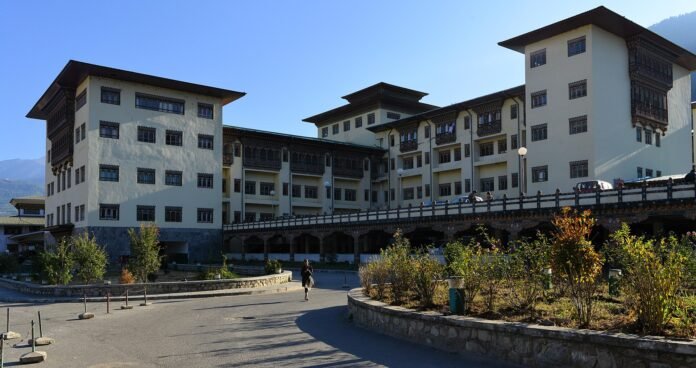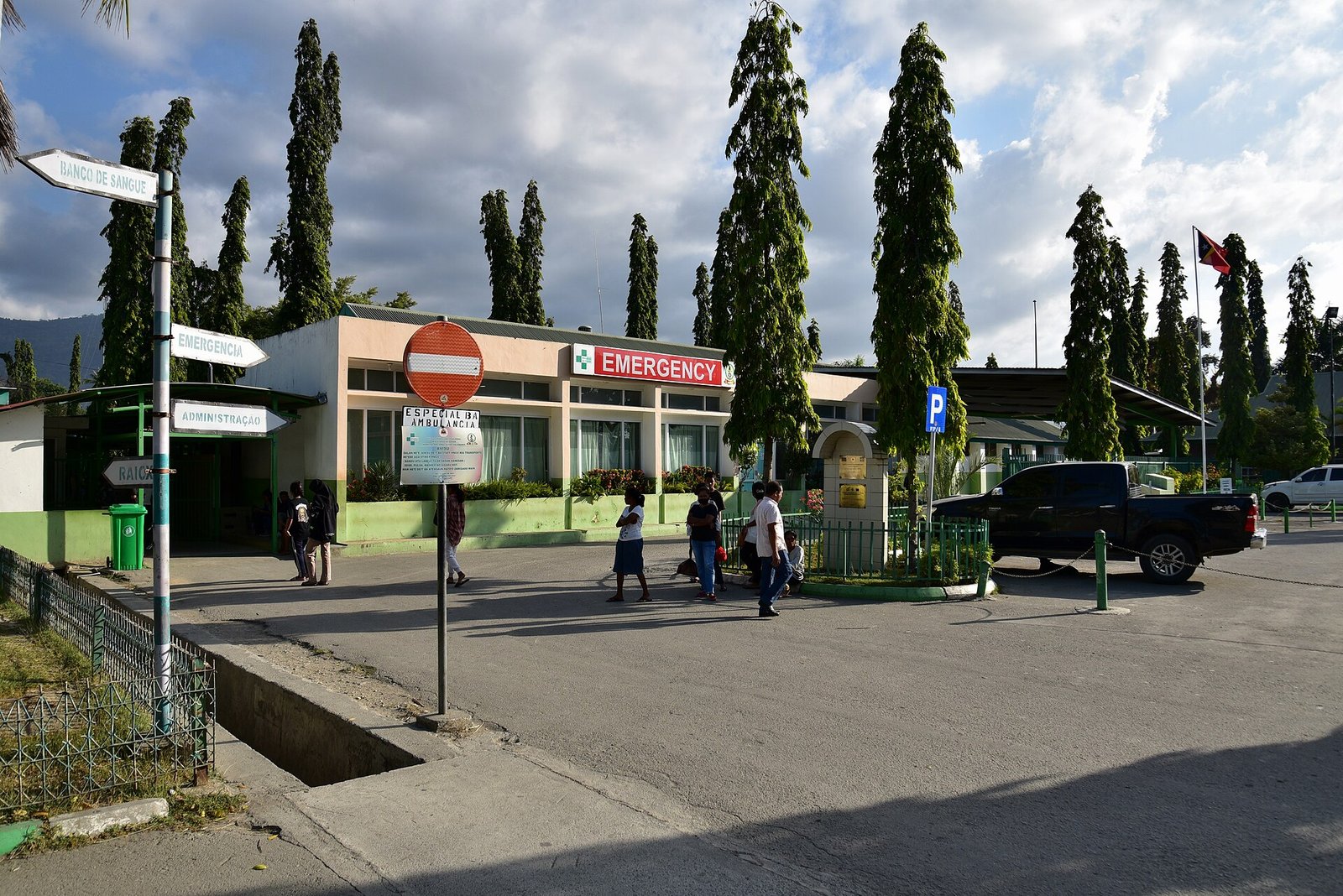
File photo: “Hospital Nacional Guido Valadares, 2023 (01)”, Bahnfrend / Wikimedia Commons. License: CC BY-SA 4.0.
A low-cost health plan can be of little use if a clinic will not accept it, you have to pay the full bill upfront, or the insurer later rejects your claim. Before choosing cover for Timor-Leste, find out how you would get care near your home or campus, what you would pay first, and how an insurer handles treatment and evacuation. These questions matter even if you are healthy now.
If you are bringing a spouse or children, check each person’s cover separately. A family policy may not cover maternity care, a newborn from birth, routine child visits, dental emergencies or pre-existing conditions in the way you expect. Parents paying for a student’s education should ask for the full policy wording and a written explanation of major limits, not just a summary of benefits. Rules and available services can change, so confirm important details with the university, immigration authorities, healthcare providers and insurer before you commit.
Start with your university and visa rules
Do not assume that health insurance is either compulsory or unnecessary for a student visa or residence permit in Timor-Leste. Requirements can depend on your application, the length and type of stay, and current immigration instructions. A university may also ask for proof of cover at admission or enrolment even when an immigration checklist does not clearly require it. Check directly with the Timor-Leste embassy or consulate handling your application, the immigration authority, and your university’s international office.
Timor-Leste has universities including Universidade Nacional Timor Lorosa’e, Universidade da Paz and Dili Institute of Technology. Their insurance arrangements and requirements may differ, and they can change. Contact the international office at the institution where you plan to study to ask whether it has a preferred or approved policy, whether students must arrange their own cover, and what documents it needs.
Ask five exact questions before paying:
- Is insurance mandatory for admission, a student visa, a residence permit or enrolment, and which authority requires it?
- Will the university and immigration authority accept a policy from an overseas insurer, or must it be issued locally?
- What minimum benefits, dates of cover and certificate language are required, if any?
- Does the university provide or approve a plan, and can it explain how students use that plan at local facilities?
- Can my spouse and children join the same policy, and do they need separate proof for their own visas or registration?
Keep the policy certificate, full wording, proof of payment, insurer contact details and any official written answer about requirements. Save digital copies somewhere you can reach without an internet connection. If your course lasts longer than a year, ask how far ahead you must renew and whether renewal is guaranteed, whether the premium or benefits can change, and how to avoid a gap between policies.
Understand how healthcare works in Timor-Leste
Timor-Leste has public health services as well as private clinics and other providers. Dili, the capital, has the broadest range of facilities and is where you are more likely to find referral services, private care and providers used to dealing with international patients. In smaller cities and towns such as Baucau, Maliana and Suai, choices may be more limited. The type of treatment available, staffing, medicines and equipment can vary between facilities and over time.
Foreign students should not assume that they are entitled to the same services at the same cost as citizens, or that every public facility can provide the care they need. Ask the facility about eligibility, fees, opening hours and referral arrangements. For serious illness or injury, a local provider may need to assess you and arrange onward care; your insurer’s assistance service can advise on approved facilities and transport. The World Health Organization, the US Centers for Disease Control and Prevention, Smartraveller and the UK government’s travel advice provide general country information, but they cannot confirm the current capacity of a particular clinic.
At some facilities, especially private ones, you may be asked to pay before treatment or settle a bill before leaving. Even where a provider can bill an insurer directly, that arrangement may apply only to particular treatment or policyholders. If your policy works by reimbursement, you may need enough accessible money to pay and then submit itemised bills, medical notes and proof of payment. Ask both the insurer and the facility what happens in an emergency, not just during a routine visit.
Before choosing accommodation, call two nearby clinics and a hospital. Ask whether they accept your policy, can bill the insurer directly, require payment upfront, and have staff who can communicate with you in a language you understand.
What should a student health plan cover?
Look beyond the benefit headings. Check limits, exclusions, approval requirements, the treatment area covered and how claims are paid. A large annual limit does not help if the care you need is excluded or the nearest suitable provider is outside the plan’s network.
| Type of care | What to check in the plan |
|---|---|
| Emergency care | How the plan defines an emergency, which facilities are covered, what to do if you cannot call the insurer first, and whether ambulance or urgent transport is included. |
| Hospital care | Inpatient limits, room and treatment limits, exclusions, pre-approval rules, and whether the insurer can arrange direct billing at a facility you could use. |
| Outpatient care | Cover for consultations, tests and follow-up appointments, the annual or per-visit limit, and whether referrals are required. |
| Prescription medicines | Whether prescribed medicines are covered, which pharmacies can dispense them, any reimbursement cap, and whether ongoing prescriptions are treated differently. |
| Medical evacuation | Where evacuation can take you, who decides it is medically necessary, whether transport and medical staff are covered, and whether you must get prior approval. |
| Repatriation | Whether the benefit covers returning remains after death, separate from medical evacuation, and who makes arrangements and pays related costs. |
| Mental health | Cover for counselling, psychiatric care, medicines and hospital treatment, plus limits, referral rules and exclusions. |
| Dental and vision | Whether the policy covers only urgent treatment or also check-ups, glasses, routine dental work and treatment of existing problems. |
| Pregnancy and childbirth | Whether maternity is included, waiting periods, benefit limits, complications, delivery and newborn cover from the date of birth. |
When money is tight, prioritise substantial emergency and hospital cover, an assistance service you can reach, and a clear evacuation benefit. Then work out whether you can afford the deductible and any upfront bills. Routine visits and dental benefits matter too, but do not let small day-to-day benefits distract you from a major gap in hospital protection.
Local insurance or international cover?
Students may encounter local voluntary policies, university-arranged schemes, international student or expatriate plans, or a local policy combined with separate travel cover. Availability and acceptance vary. Do not treat a policy marketed for travel as a substitute for long-term health insurance without checking its duration rules, exclusions and renewal terms. Ask the university and providers in Timor-Leste which arrangements they recognise in practice.
| Plan approach | Potential advantages | Questions or limitations to check |
|---|---|---|
| Local voluntary or student cover | May be designed for local use and could be easier to discuss with providers in the country. | Is it open to international students and dependants? Which facilities accept it? Are benefits, evacuation and claims support sufficient for your needs? |
| International student or expatriate insurance | May offer broader geographic cover, assistance services or benefits for treatment outside the country. | Does it cover routine care in Timor-Leste, and can you get direct billing locally? Check exclusions, local networks, payment currency and the process for paying first and claiming later. |
| A local plan plus separate travel cover | May combine local access with protection for defined journeys, depending on the policy terms. | Do the policies overlap or leave gaps? Does travel cover exclude routine care, long stays or trips home? Confirm which insurer handles evacuation and any claim involving both policies. |
Before buying, name a clinic and hospital you might actually use, then ask each whether it accepts the policy and whether it bills the insurer directly. If neither can confirm, ask the insurer for written instructions on paying for treatment and claiming reimbursement.
Buying cover for a spouse or children
Check the policy for every family member rather than assuming that a student’s benefits automatically extend to the household. Children may need paediatric visits, care for fevers outside normal clinic hours, vaccinations and urgent dental treatment. Confirm what is included and where you can obtain it. Routine vaccinations may be provided through health services, but availability, eligibility and charges should be checked locally.
Maternity cover deserves particular attention. Policies can exclude pregnancy, impose a waiting period, cap benefits or cover complications differently from routine antenatal care and childbirth. Ask when a newborn becomes insured, how quickly the insurer must be notified, and whether cover is automatic or requires a separate application. A family’s insurance does not establish its immigration status: each person’s visa, residence or registration requirements are a separate matter to confirm with the relevant authority.
- Ask whether each dependant is named on the certificate and when their cover begins.
- Check child-specific limits, after-hours care, medicines, vaccinations and dental emergencies.
- For pregnancy, get the waiting period, exclusions, delivery limit and newborn rules in writing.
- Confirm whether dependants need separate application documents for their stay in Timor-Leste.
Compare the full cost, not just the premium
The premium is the amount you pay to hold the policy. An excess or deductible is the amount you pay for eligible care before the insurer contributes, while a co-payment is your share of a covered bill. Annual limits cap what the insurer pays, and some policies also have limits for particular services. Add likely upfront bills and uncovered visits when comparing plans.
The following is a made-up example, not a quote from an insurer in Timor-Leste. It shows how a lower premium can still leave you paying more over a year.
| Cost item | Plan A | Plan B |
|---|---|---|
| Premium | Lower | Higher |
| Excess paid during the year | Higher | Lower |
| Co-payments and uncovered visits | Higher | Lower |
| Illustrative total paid | Higher overall after a year with several visits | Lower overall after the same visits |
Ask the insurer to show how the deductible and co-payments apply to common situations, such as a consultation, a test and an overnight admission. Timor-Leste uses the US dollar as its currency. Ask what currency the premium and claims are handled in, and check whether your bank will charge conversion or international transaction fees when you pay.
Read exclusions before you sign
Disclose pre-existing conditions accurately, including ongoing treatment and prescribed medicines. Ask how the insurer defines a pre-existing condition, whether it can be covered, and whether any waiting period or exclusion applies. An incomplete or inaccurate application can affect a later claim.
Check whether care outside a provider network is covered, and whether you need a referral or approval before treatment. If your course includes fieldwork, outdoor activities, sports or clinical placements, ask whether accidents during those activities are covered and whether the university provides any separate protection. Do not assume that an activity is covered just because it is part of your studies.
Read the evacuation definition closely. A policy may require a doctor and the insurer to agree that local treatment is inadequate, and it may limit the destination or method of transport. Ask whether the benefit covers medical staff, an accompanying person and the costs of arranging transport. Find out who to call before a hospital admission; failing to get approval when required can reduce or jeopardise payment. Insurance is not a substitute for medical advice, so seek appropriate care when you need it.
What to do before you leave
Arrange a health check with a qualified health professional before departure and ask about vaccinations and any health preparation appropriate to your own circumstances and destination. Guidance can change, and individual advice depends on your health and itinerary. For prescription medicines, do not assume that every medicine can be brought in or is available locally. Check current import and documentation rules with the Timor-Leste embassy or consulate, and travel with prescriptions and medicines in their original packaging.
Use this checklist before travelling:
- Get an insurance certificate listing every insured person, with cover dates that include your travel days.
- Download the full policy wording and save the insurer’s assistance contact details, including its 24-hour number if it has one.
- Identify a hospital, clinic and pharmacy near your accommodation, and ask about payment and direct billing.
- Pack prescribed medicines in their original packaging with appropriate prescription documentation.
- Confirm whether your policy covers trips home, travel days and any journeys outside Timor-Leste.
- Save offline copies of your policy, passport details, prescriptions, university documents and emergency contacts.
- Ask the university what to do if you need care, and confirm any visa or residence requirements before departure.
What to do after arriving in Timor-Leste
During your first week, check that your cover is active, that your name and dates are correct, and that the insurer’s contact details work from your phone. Ask the university or insurer for current guidance on nearby facilities and keep your admission, visa and residence or registration records together. Do not rely on an emergency number found in an old guide; confirm current local emergency contacts with your university or a trusted local source after arrival.
For a planned visit, call the insurer to check whether approval or a referral is needed. At the clinic, ask for an itemised bill, diagnosis or treatment notes where appropriate, receipts and copies of test results. Submit the claim within the policy deadline and keep a copy of everything. If a claim is refused, ask the insurer for the decision and the specific policy wording it relies on, then follow its internal review or appeal process. If the disagreement remains, ask the university international office whether it can direct you to an appropriate local consumer or regulatory contact.
Common questions from international students
Is the cheapest local plan enough?
Not necessarily. A low premium may come with limited hospital benefits, restricted providers, no evacuation cover or substantial out-of-pocket costs. Compare the wording and ask a clinic you could use whether it accepts the plan before paying.
Will a travel plan work for a multi-year degree?
Do not assume so. Travel policies may limit the length of each trip, exclude routine or ongoing care, or require you to return home between periods of cover. Ask the insurer whether it will cover your full study stay and renew without a gap, and confirm acceptance with your university.
Does a family plan always cover maternity and dental care?
No. Maternity may have exclusions, waiting periods or benefit limits, while dental cover may be limited to emergencies or excluded. Ask for the exact terms, including how and when a newborn can be added.
What happens if I move to another city in Timor-Leste?
Your policy may still be valid, but your access to covered facilities and direct billing can change. Before moving from Dili to Baucau, Maliana, Suai or another location, ask the insurer for nearby providers and the process for care where no network facility is available.
Pro Tips
Choose cover that your university accepts and a local clinic or hospital can actually use. Written confirmation from both is more useful than a general promise that a policy is accepted nationwide.
Check every insured person, every benefit limit and every likely cost before paying. A family’s needs can differ: a child may need frequent visits, while a student with a continuing condition may need medicines or follow-up care.
For trustworthy answers, start with your university’s international office, the Timor-Leste embassy handling your application, and the relevant immigration authority. Use public sources such as the World Health Organization, CDC, Smartraveller and the UK government’s travel advice for general context, then confirm local details directly with providers and your insurer.
References
- World Health Organization. (n.d.). Timor-Leste. https://www.who.int/
- Centers for Disease Control and Prevention. (n.d.). Travelers’ health. https://wwwnc.cdc.gov/travel
- Australian Government, Smartraveller. (n.d.). Timor-Leste travel advice. https://www.smartraveller.gov.au/
- UK Government. (n.d.). Foreign travel advice. https://www.gov.uk/foreign-travel-advice
- U.S. Department of State. (n.d.). Timor-Leste international travel information. https://travel.state.gov/
- Government of Timor-Leste. (n.d.). Government portal. https://timor-leste.gov.tl/
- Universidade Nacional Timor Lorosa’e. (n.d.). University website. https://www.untl.edu.tl/