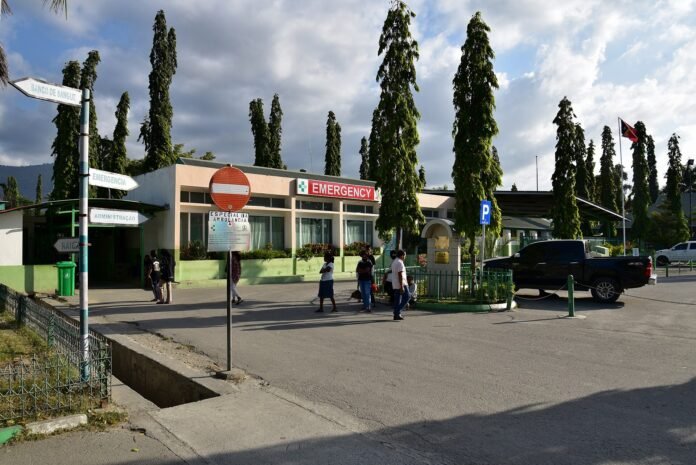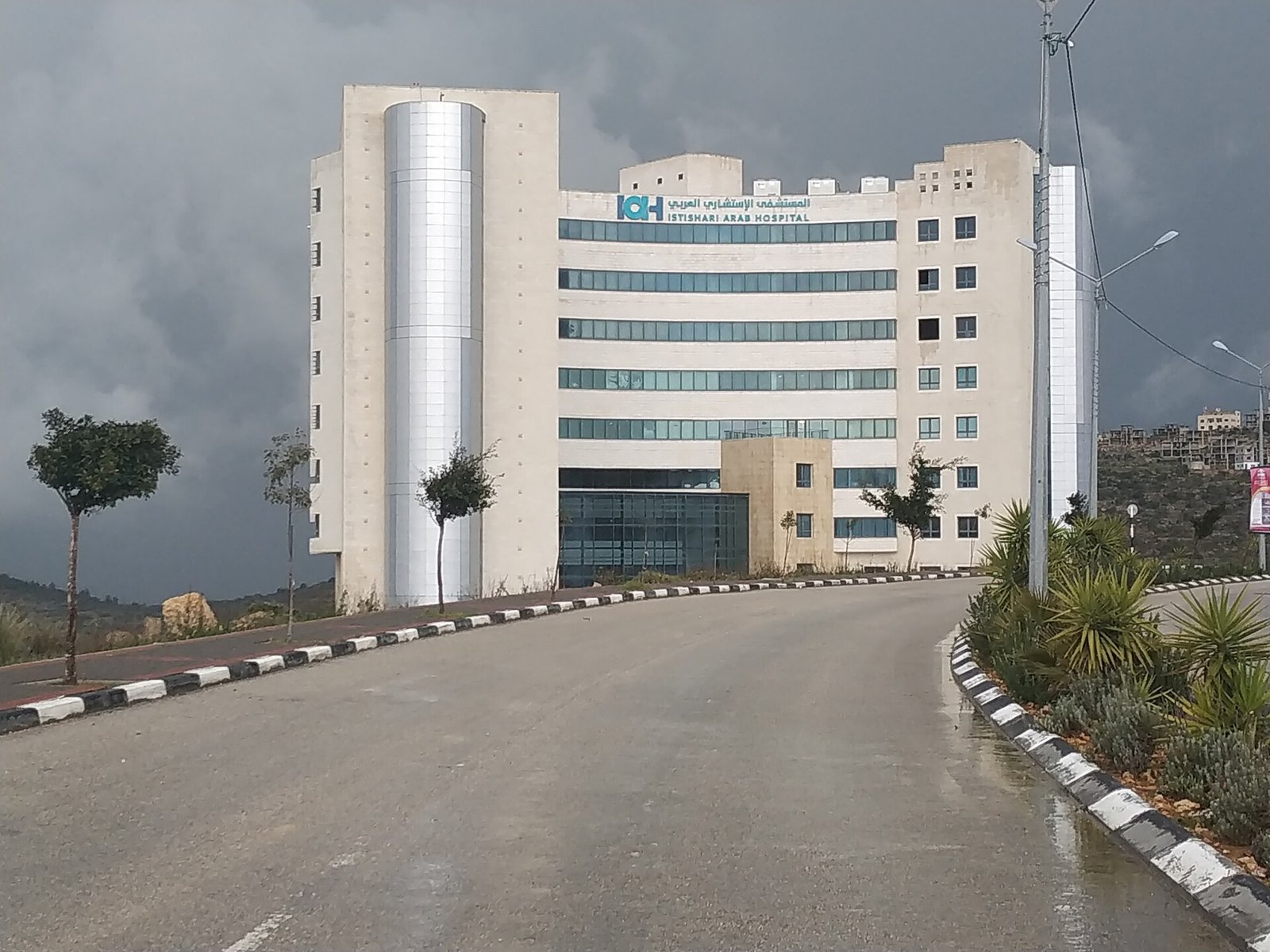
File photo: “Istishari Arab Hospital 003”, أمين / Wikimedia Commons. License: CC BY-SA 4.0.
A low-cost health plan can leave you exposed if a nearby hospital will not accept it, you have to pay the full bill before seeking reimbursement, or the insurer later refuses the claim. Before you buy, find out how care and insurance work where you will actually live and study. That means checking the rules with your university and confirming that local providers can work with the insurer.
Planning for a spouse or children adds more questions. A family policy may not include maternity care, routine child health visits, dental emergencies or cover for a newborn automatically. Entry and permission-to-stay arrangements can also differ depending on your nationality, status and destination. This guide gives you a way to check those details, compare plans and prepare for care in Palestine. Treat it as a planning tool, not medical or immigration advice. Confirm current requirements with your university, the relevant authorities and your insurer before you travel.
Start with your university and visa rules
Do not assume that one insurance rule applies to every international student in Palestine. The documents required for admission, entry, permission to remain or university registration may depend on your nationality, route of entry, study location and personal status. For many international arrivals to the West Bank, entry permissions are handled by Israeli authorities. Arrangements for East Jerusalem and Gaza can differ, and access conditions may change. Ask your university which authority and process apply to you.
A university may ask you to show proof of insurance at admission or registration, or may direct you to a particular scheme. That does not by itself establish what an authority requires for entry or residence. Birzeit University, An-Najah National University and Bethlehem University are real institutions, but their requirements can vary by programme and year. Contact the international office at the university where you will study and request current instructions in writing.
Ask five exact questions before paying:
- Is health insurance mandatory for admission, entry permission, permission to stay, university registration, or more than one of these?
- Will you accept a policy from an insurer based outside Palestine, or must the cover be arranged locally?
- What benefits, coverage dates and certificate language must the policy show?
- Does the university provide or approve a plan, and can you choose another policy that meets its requirements?
- Can my spouse and children join, and do they need separate proof of insurance or permission to stay?
Keep copies of your insurance certificate, full policy wording, payment receipt, university acceptance documents and any written instructions you receive. Save them on your phone and in a secure online location. If your course lasts longer than a year, ask when renewal proof is due, whether the policy can be renewed without a gap and whether the university needs a new certificate each academic year. Verify any entry or residence rule with the relevant authority and your embassy, as well as the university.
Understand how healthcare works in Palestine
Healthcare is provided through public facilities, private clinics and hospitals, charitable providers and other organisations. As an international student, you may be able to seek care at public facilities, but do not assume that services will be free or that you have the same eligibility as a resident. Ask the provider and your insurer about fees, referrals and payment before planned treatment. In an emergency, seek urgent help first where possible, then contact your insurer as soon as it is safe.
Students commonly live in or near Ramallah, Nablus, Bethlehem, Hebron, Jerusalem and Gaza City. Availability of specialists, diagnostic services and hospital services varies by location and provider. Larger urban centres may offer a wider choice of private providers, while smaller communities may have fewer nearby options or require travel for specialist care. Access can also be affected by movement restrictions, checkpoints, closures and the wider security situation. The quality of care is not uniform, so a city name alone cannot tell you whether a particular clinic or hospital is suitable.
Some providers may expect you to pay at the time of care, especially if they cannot bill your insurer directly. With a reimbursement policy, you may need to pay the bill yourself, obtain an itemised receipt and submit a claim later. Check whether the insurer requires advance approval for hospital admission, tests or specialist visits, and whether it has a local assistance contact. Information from the World Health Organization, the US Centers for Disease Control and Prevention, and government travel advice can help you understand current health and access conditions, but does not confirm that a provider accepts your policy.
Before choosing a plan, call two clinics and one hospital near your planned home. Ask whether they treat international patients, accept your insurer, can bill it directly, and have staff who can communicate with you in a language you understand.
What should a student health plan cover?
Compare written benefits, exclusions and payment rules, not just a policy summary. Ask the insurer to explain unclear terms before you enrol, particularly for ongoing treatment or care that needs prior approval.
| Type of care | What to check in the plan |
|---|---|
| Emergency care | Which urgent services are covered, how to contact assistance and whether emergency treatment must be reported within a set period. |
| Hospital care | Annual limits, room and treatment limits, the admission approval process, eligible hospitals and whether direct billing is available. |
| Outpatient care | Coverage for consultations, tests and specialist visits, including referral requirements, visit limits and co-payments. |
| Prescription medicines | Which prescribed medicines are covered, whether there is a pharmacy network, and what receipts or prescriptions are needed for reimbursement. |
| Medical evacuation | What situation qualifies, who decides it is medically necessary, where transport may go and whether prior approval is required. |
| Repatriation | Whether transport of remains is covered, who arranges it and whether there is a separate limit from medical evacuation. |
| Mental health | Coverage for counselling, psychiatric care and prescribed treatment, plus provider limits, referrals and confidentiality terms. |
| Dental and vision | Whether cover is limited to accidents, includes routine care, or has separate limits and waiting periods. |
| Pregnancy and childbirth | Waiting periods, maternity limits, antenatal visits, birth complications and care for the newborn after delivery. |
If money is tight, prioritise protection against a serious illness or accident that could mean hospital treatment, and make sure the plan works with providers you can reach. A low premium with a small hospital limit or a large deductible may not protect your budget. You can decide whether to pay for routine dental or vision care yourself, but check the likely costs and availability locally before excluding them.
Local insurance or international cover?
Your main options are a locally arranged plan, international student or expatriate insurance, or a local policy combined with separate travel cover. The choice depends on what your university accepts, whether local facilities can bill the insurer, the length of your stay and where you may travel. There is no single option that suits every student or family.
| Plan approach | Potential advantages | Questions or limitations to check |
|---|---|---|
| Local voluntary or student cover | May be familiar to nearby providers and may suit care during a stay in one area. | Is it available to international students? Which facilities participate? What are the benefits, exclusions, geographic limits and renewal terms? |
| International student or expatriate insurance | May offer broader geographic protection, support in more than one language or options for treatment during travel. | Will the university accept it? Can local providers bill it directly? Are there local limits, exclusions, upfront-payment requirements or restrictions on planned care? |
| A local plan plus separate travel cover | May combine local access for routine care with cover for defined trips away from your study location. | Do the policies overlap or leave gaps? Does travel cover exclude care in your place of study, ongoing conditions or trips home? Which insurer handles an emergency? |
Before buying, send the insurer your university’s written requirements and the names of providers near your home. Ask for written confirmation of what is covered, how claims work and whether those providers can bill the insurer. If the answers are vague, keep comparing.
Buying cover for a spouse or children
Read the policy for each family member rather than assuming the main student’s benefits apply to everyone. A dependant may need their own certificate or enrolment, and their eligibility may depend on age, relationship or residence status. Check whether family cover starts on the same date as yours and whether it remains valid if your course or status changes.
- Children’s care: Check cover for paediatric visits, treatment for a fever at night, vaccinations and dental emergencies. Ask whether routine vaccinations are included or must be paid for separately.
- Maternity: Find out whether pregnancy and childbirth are included, whether there is a waiting period, and whether the policy excludes a pregnancy that began before cover started.
- Newborns: Ask when a newborn becomes eligible, how soon you must notify the insurer and whether the baby needs a separate application or premium. Do not assume the baby is automatically covered from birth.
- Family status: Insurance does not grant entry permission or permission to stay. Confirm your spouse’s and children’s entry, study or registration requirements separately with the relevant authority and the university.
Compare the full cost, not just the premium
The premium is the amount you pay to keep the policy active. An excess or deductible is the amount you pay toward eligible care before the insurer contributes, while a co-payment is your share of a particular visit or service. Annual limits cap what the insurer will pay, and excluded care is not reimbursed at all. Check whether those limits apply to each person, each type of care or the whole policy.
The figures below are a made-up example to show how a cheaper premium can cost more overall. They are not a quote from an insurer in Palestine and do not describe any actual policy.
| Cost item | Plan A | Plan B |
|---|---|---|
| Premium | Lower | Higher |
| Excess paid during the year | Higher | Lower |
| Co-payments and uncovered visits | More frequent or higher | Less frequent or lower |
| Illustrative total paid | May be higher after care is used | May be lower after care is used |
For a fair comparison, estimate a normal year of visits and medicines, then consider a year with a hospital admission. Include the premium, likely out-of-pocket payments and any care you know the plan excludes. The Israeli new shekel is commonly used for everyday payments in many parts of Palestine, though other currencies may also be used depending on the provider. Ask your bank and insurer about exchange rates, settlement currency and bank conversion fees.
Read exclusions before you sign
Tell the insurer about existing health conditions and past treatment accurately. A condition may be excluded, covered with limits or assessed under specific terms, but failing to disclose information can put a claim at risk. Ask how the insurer defines a pre-existing condition and request the decision in writing if it affects your cover.
Check whether care outside the insurer’s network is covered, and whether you must pay upfront. If your course includes fieldwork, clinical placements or sport, ask whether accidents during those activities are included. Some policies limit cover for particular activities or require extra approval. Do not assume that a university placement is automatically treated as ordinary study.
“Medical evacuation” can mean different things across policies. Ask what medical threshold must be met, who selects the destination, whether transport between facilities is covered and whether the insurer will pay for an escort. Also confirm whether the policy covers repatriation separately. Before a planned hospital admission, find out whether the insurer must be notified and approved in advance. In an emergency, follow local medical advice first and contact the insurer as soon as practical.
What to do before you leave
Arrange a health check with a qualified health professional and ask whether any vaccinations or repeat prescriptions are appropriate for your circumstances. Health guidance can change, so consult a clinician and review current information from a recognised public health source. Rules on bringing prescription medicines may depend on the medicine, quantity and your route. Keep medicines in original packaging with the prescription or a letter from your prescriber, and confirm current import rules with the relevant embassy or authorities before travel.
- Get an insurance certificate that lists every insured person and the dates of cover.
- Download the full plan wording, exclusions and claim instructions, not just the summary.
- Save the insurer’s 24-hour assistance number, if your plan provides one, and confirm how to call it from Palestine.
- Identify a hospital, clinic and pharmacy near your home, and ask about acceptance and payment arrangements.
- Pack medicines in their original packaging with prescriptions or supporting medical information.
- Check that cover includes your travel days and any trips away from your study location, including visits home.
- Keep offline copies of insurance, identity, medical and university documents in a secure place.
What to do after arriving in Palestine
During your first week, check that your policy is active, each family member is enrolled and the dates match your stay. Keep your university registration and any entry or registration records with your insurance documents. Save local emergency contact details after arrival and confirm them with your university or accommodation provider, as numbers and services can vary by location and may change.
For a claim, follow the insurer’s instructions. Contact its assistance service when required, request itemised bills and receipts, keep prescriptions and medical reports, and submit documents within the stated deadline. If a claim is refused, ask for the reason and the policy clause in writing. Send any missing documents and use the insurer’s formal review or complaints process. Your university international office may help you identify the right local contact, but it cannot decide an insurance claim.
Common questions from international students
Is the cheapest local plan enough?
Not necessarily. A lower-cost plan may have limited hospital benefits, few participating providers or higher out-of-pocket costs. Check that the university accepts it and that a clinic and hospital near your home can use it.
Can I use a travel plan for a multi-year degree?
Do not assume so. Travel policies may be designed for temporary trips and can limit cover for ongoing treatment, extended stays or care in your place of study. Ask the insurer to confirm in writing that the policy covers your full course period and meets your university’s requirements.
Does a family plan always cover maternity and dental care?
No. Maternity may have a waiting period or separate limit, while dental cover may be limited to emergencies or accidents. Ask about routine care, childbirth and newborn enrolment before paying.
What happens if I move to another city in Palestine?
Your policy may remain active, but the nearby provider network and access to direct billing can change. Before moving, confirm coverage with the insurer and check which clinics and hospitals near your new home accept the plan.
Pro Tips
Choose cover that your university accepts and that a clinic or hospital near your home can use. Ask both the university and the provider about direct billing, required approvals and what you may need to pay upfront.
Before paying, check every insured person, coverage date, benefit limit, deductible, co-payment and exclusion. Keep the answers that affect your decision in writing, especially for maternity, pre-existing conditions and hospital admission.
For trustworthy guidance, contact your university’s international office, the relevant embassy and the authority responsible for your entry or stay. Use public health and travel-advice sources for general information, then confirm practical details with your insurer and local providers.
References
- World Health Organization. (n.d.). Palestine. https://www.who.int/
- Centers for Disease Control and Prevention. (n.d.). Travelers’ health. https://wwwnc.cdc.gov/travel
- Australian Government, Smartraveller. (n.d.). Smartraveller. https://www.smartraveller.gov.au/
- UK Government. (n.d.). Foreign travel advice. https://www.gov.uk/foreign-travel-advice
- U.S. Department of State. (n.d.). Travel advisories. https://travel.state.gov/
- Birzeit University. (n.d.). Birzeit University. https://www.birzeit.edu/
- An-Najah National University. (n.d.). An-Najah National University. https://www.najah.edu/
- Bethlehem University. (n.d.). Bethlehem University. https://www.bethlehem.edu/